





After a possible STD exposure, one question tends to rise above all others: How soon can I get tested? It's a smart question, and asking it means you're already taking your health seriously.
The reassuring answer is that testing is available, accessible, and more accurate than ever. But here's the catch: timing matters. Testing too early can give you a falsely clean bill of health, even if an infection is already present.
Understanding when to get tested for STDs, and why, can make all the difference in getting a result you can trust.
The STI window period is the time between when you were exposed to an infection and when that infection can be reliably detected by a test. During this window, your body may be infected, but the virus or bacteria hasn't multiplied enough, or your immune system hasn't responded strongly enough for a test to pick it up.
This is why a negative test result immediately after exposure doesn't necessarily mean you're infection-free. It may simply mean it's too early to tell. Window periods vary depending on the specific STD and the type of test used, which is why knowing the right STD testing timeline is so important.
Yes, and it happens more often than people realize.
When you're exposed to an infection, your body needs time to respond. For many STDs, tests work by detecting antibodies or antigens. Neither of these are present in detectable levels immediately after exposure.
Testing too early can lead to a false-negative result, a test that comes back negative even though an infection is present. This can create a false sense of security and may delay treatment.
Healthcare providers often recommend follow-up testing after the window period has passed, especially for infections like HIV and syphilis, where early detection makes a significant difference in treatment outcomes.
Here's a practical look at testing windows for the most common infections:
In some cases, yes. A single test taken before the window period closes may not be definitive.
HIV and syphilis are two common examples where follow-up testing is often recommended. If your first test is negative but falls within the window period, your provider may advise retesting at the 45-day and/or 90-day mark.
Repeat testing is also a good idea if:
This point is worth emphasizing because it's one of the most misunderstood aspects of sexual health.
Chlamydia, gonorrhea, and HIV, three of the most common STDs, frequently cause no noticeable symptoms in the early stages, or ever. People can carry and transmit these infections for months or years without knowing it.
Waiting to feel sick before getting tested is not a reliable strategy. For many infections, testing is the only way to know your status with confidence.
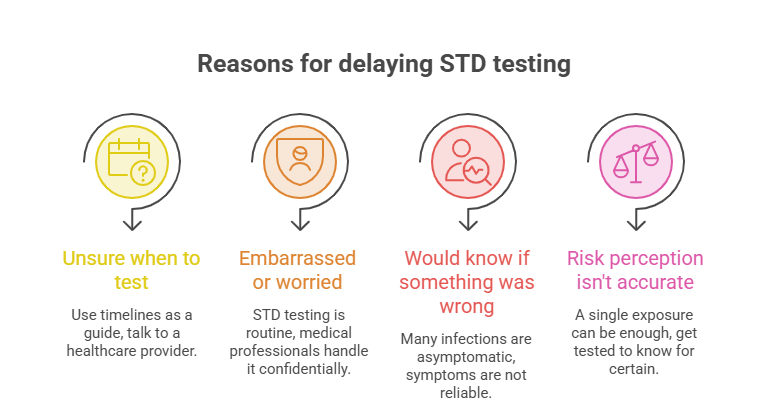
Here are some of the most common reasons people wait, and why each one is worth reconsidering:
"I'm not sure when to test." Now you know. Use the timelines above as a guide, and when in doubt, talk to a healthcare provider about your specific situation.
"I'm embarrassed or worried about being judged." STD testing is a routine part of healthcare, no different from checking your blood pressure or cholesterol. Medical professionals handle these conversations with confidentiality and professionalism every day.
"I'd know if something was wrong." As discussed, many infections are completely asymptomatic. Symptoms are not a reliable signal.
"I don't think my risk was that high." Risk perception isn't always accurate, and a single exposure can be enough. The only way to know for certain is to get tested.
If you've had a possible STD exposure, the most empowering thing you can do is get informed and get tested at the right time. A proactive approach protects your health, your peace of mind, and the health of your partners.
Get Confidential STD Testing at Metro Urgent Care
At Metro Urgent Care, we offer discreet, judgment-free STD testing. Our experienced providers will help you understand your testing options, determine the right timeline based on your exposure, and guide you through next steps, including treatment when needed.
Contact us today. Your privacy is our priority.
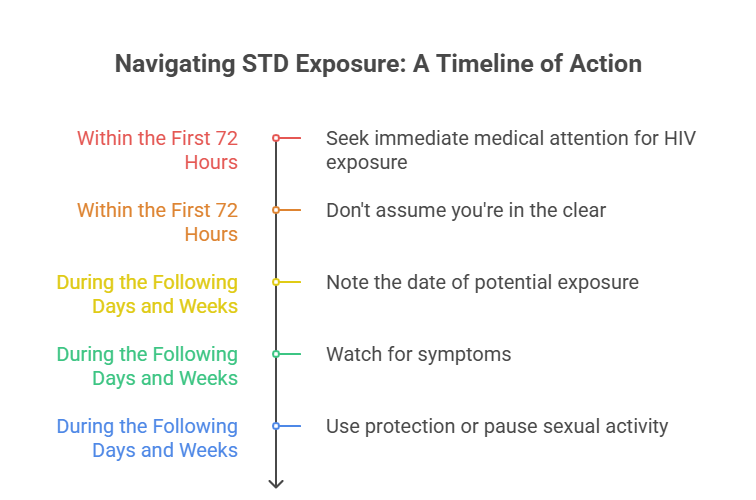
It depends on the specific STD. Most infections require a waiting period of 1–6 weeks before a test is reliable. If HIV exposure occurred within the last 72 hours, seek medical care immediately to discuss PEP.
A negative result during the window period may not be accurate. Your provider may recommend retesting once the window period has passed, typically at 45 days and again at 90 days for HIV.
Yes. Urgent care centers like Metro Urgent Care offer comprehensive STD testing, evaluation, and treatment recommendations, often on a walk-in basis without the wait of a traditional doctor's office.
No. Many common STDs, including chlamydia, gonorrhea, and HIV, frequently cause no symptoms, especially in the early stages. Testing is the only reliable way to know your status.
Absolutely. STD testing is handled with the same privacy and professionalism as any other medical visit. Your results and personal information are kept strictly confidential.


Stay protected this flu season!


