It's a hot June morning in Chicago. You wake up with a runny nose, a scratchy throat, and watery eyes. You spent the afternoon in the park yesterday, so maybe it's the grass pollen that's been coating every car in the city? But your coworker has been sniffling all week, and you sat next to her at Tuesday's lunch. Is this seasonal allergies flaring up, or did you pick up a summer bug?
It's an incredibly common dilemma, and an easy one to get wrong. Summer colds and summer allergies can look almost identical in the early stages. But they have different causes, different timelines, and require completely different approaches to treat. Reaching for the wrong remedy won't just waste your time, it can leave you feeling worse while the real culprit goes unaddressed.
Here's how to figure out what you're actually dealing with.
What Causes Summer Allergies?
Most people associate seasonal allergies with spring or fall, but summer has its own lineup of potent triggers, especially in the Midwest.
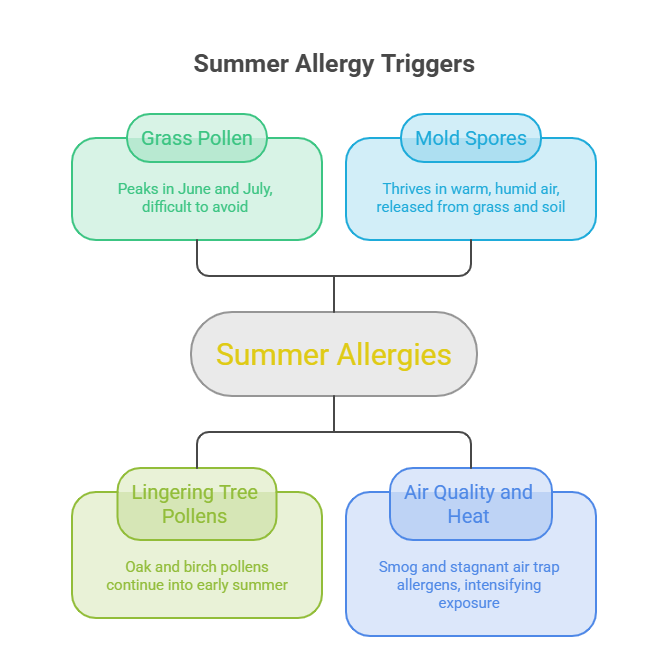
Unlike fall allergies (which are largely driven by ragweed), summer allergies are typically caused by:
- Grass pollen: the biggest summer offenders. Timothy, Bermuda, and Kentucky Bluegrass peak in June and July, releasing fine particles that are nearly impossible to avoid outdoors.
- Lingering tree pollens: oak and birch trees that started releasing pollen in spring can continue well into early summer.
- Mold spores: warm, humid summer air is a breeding ground for mold. Freshly cut grass, wet soil, and mulch all release spores that can trigger a reaction.
- Air quality and heat: summer smog and stagnant air trap allergens close to ground level, intensifying exposure on warm days.
You'll typically notice symptoms flaring in the early morning (when pollen counts are highest), on warm and windy days, or shortly after spending time outdoors.
What Is a Summer Cold?
Summer colds are genuinely common, particularly from June through August, they're just caused by a different virus than what knocks people down in the winter.
The main culprit in summer is the enterovirus, not the rhinovirus that dominates fall and winter cold season. But it spreads the same way: close contact with an infected person, touching contaminated surfaces, and then touching your face.
Summer colds are especially easy to pick up at:
- Outdoor festivals, barbecues, and family gatherings where people are in close proximity
- Swimming pools and gyms, where shared surfaces are touched frequently
- Air-conditioned indoor spaces, where people retreat from the heat and bring whatever's going around with them
One of the most useful clues that you're dealing with a cold rather than allergies is the symptom timeline. Colds tend to follow a predictable progression: sore throat first, then congestion and a runny nose, followed by fatigue. Most people recover fully within a week. While allergies tend to appear quickly after allergen exposure and stick around as long as that exposure continues.
|
Symptom
|
Summer Allergies
|
Summer Cold
|
|
Fever
|
No fever
|
Possible low-grade fever (99–101°F)
|
|
Duration
|
Weeks, lasts as long as allergen exposure continues
|
3–7 days; resolves on its own
|
|
Nasal Discharge
|
Thin, clear, watery
|
Starts clear, may turn thick/yellow-green
|
|
Itchy Eyes
|
Very common, often prominent
|
Rare; eyes may water from congestion only
|
|
Sneezing
|
Frequent, often in bursts
|
Present but usually less intense
|
|
Sore Throat
|
Mild throat irritation from post-nasal drip
|
Common, often one of the first signs
|
|
Body Aches
|
Not typical
|
Mild aches and fatigue are common
|
|
Onset
|
Begins soon after outdoor or allergen exposure
|
Gradual, 1–3 days after virus exposure
|
|
Contagious?
|
No
|
Yes, spreads person to person
|
How to Treat Summer Allergies
- Antihistamines are the go-to for sneezing and itching. Non-drowsy options are available if you need to stay functional during the day.
- Nasal corticosteroid sprays work well for persistent congestion, but they take a few days to kick in, so start them early in the season.
- Saline nasal rinses help flush pollen and irritants out of your nasal passages, providing relief without medication.
- Close windows during peak pollen hours, typically early morning. Run the A/C instead, and make sure the filter is clean.
- Shower and change clothes after spending time outdoors. Pollen clings to hair and fabric and will keep triggering symptoms if you bring it inside.
When to See a Doctor
Reach out to a provider if:
- Symptoms persist for more than 2 weeks with no improvement
- Over-the-counter antihistamines aren't giving you adequate relief
- Allergies are disrupting your sleep, your work, or your daily activities
- You develop wheezing, shortness of breath, or chest tightness, this can signal allergy-triggered asthma, which needs prompt evaluation
How to Treat a Summer Cold
- Rest. It's not optional. Your body is working hard to fight off the virus, and pushing through only prolongs recovery.
- Stay hydrated. Water, warm broths, and herbal teas keep your throat from drying out and support your immune response. This matters even more during Chicago summer heat.
- OTC decongestants or throat lozenges can ease the worst of your symptoms while you recover.
- Try a cool-mist humidifier if your air conditioning is making the air uncomfortably dry, especially helpful for a sore throat.
- Saltwater gargles can meaningfully reduce throat soreness.
When to Seek Medical Attention
Most summer colds resolve on their own, but see a provider if:
Prevention Tips for Both Conditions
1. Reducing Your Summer Allergy Exposure
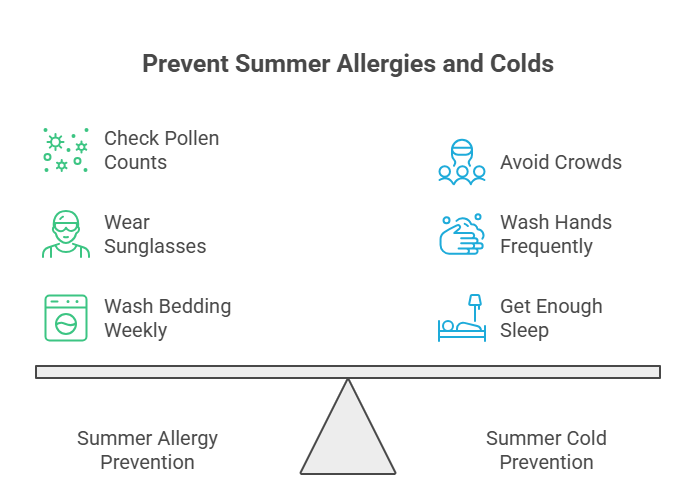
- Check daily pollen counts before heading outside. Chicago grass pollen peaks in June and July, and high-count days can make a significant difference in how you feel.
- Wear sunglasses outdoors, wraparound styles create a physical barrier against airborne pollen reaching your eyes.
- Avoid mowing or being near freshly cut grass during peak pollen windows. If you do yard work, wear a mask.
- Wash bedding weekly in hot water during pollen season, and keep pets off furniture, they carry pollen in from outdoors.
2. Preventing a Summer Cold
- Wash your hands frequently, especially after public events, gyms, or pool visits.
- Avoid touching your face, particularly your eyes, nose, and mouth, which are the main entry points for viruses.
- Don't share drinks, utensils, or towels at cookouts or gatherings.
3. Boosting Your Immune System Year-Round
Whether it's allergies or a cold, a well-supported immune system handles both better. Adequate sleep, a diet rich in vitamin C and zinc, and regular physical activity all reinforce your body's defenses. If you've been running on empty, poor sleep, high stress, skipped meals, your body simply has fewer resources to manage either condition.
Still Not Sure What You Have? Metro Urgent Care Can Help
Sometimes the symptoms are clear-cut. But when they're not, when you're not sure if you should be taking an antihistamine or calling in sick, when the symptoms drag on longer than they should, or when something feels off, it makes sense to get checked out.
Our team at Metro Urgent Care can quickly help you figure out whether you're dealing with a summer cold, seasonal allergies, or something else entirely, and get you on the right treatment plan without the wait of a primary care appointment.
Contact us today.
Frequently Asked Questions About Summer Cold vs Allergies
1. Can you get a cold in the summer?
Yes, summer colds are common and are typically caused by viruses that circulate during warmer months.
2. What are the main signs it's allergies and not a cold?
Itchy eyes, sneezing, and symptoms that persist without fever are more suggestive of allergies than a cold.
3. Do summer allergies cause a sore throat?
Yes, postnasal drip from allergies can irritate the throat and cause soreness or discomfort.
4. What's the fastest way to tell a summer cold from allergies?
Colds usually develop gradually and resolve within a week, while allergy symptoms begin after exposure and persist as long as the trigger remains.
5. When should I go to urgent care for summer allergies or cold symptoms?
Seek medical attention if you experience breathing difficulties, high fever, worsening symptoms, or symptoms that do not improve with treatment.
More Resources: