





Most people expect to feel at least somewhat rested after a full night's sleep. So when you open your eyes and the first thing you notice is a throbbing head, it's more than frustrating. It disrupts your morning before it even starts.
An occasional morning headache is usually nothing to worry about. Dehydration, one too many drinks the night before, or a rough night of sleep can all trigger that dull pressure you feel before your coffee. But when it happens regularly, day after day, your body may be pointing to something that deserves a closer look.
Below, we break down the most common causes of morning headaches, the warning signs that warrant prompt attention, and when a provider should take a look.
A morning headache is any head pain present when you wake up or that develops within the first couple of hours of your day. It can range from mild pressure to a full migraine with nausea and light sensitivity.
What makes the timing significant: unlike a headache triggered by screen time or skipping lunch, morning headaches often develop during sleep. That means the cause is usually internal, how you're breathing, how much tension your muscles are holding, or how your blood pressure is trending overnight.
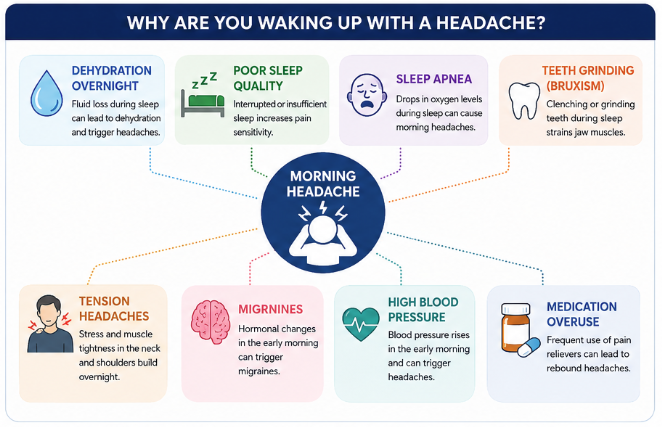
Waking up with a headache can happen for several reasons, including dehydration, poor sleep, sleep apnea, teeth grinding, migraines, muscle tension, or changes in blood pressure. The timing of the headache and any symptoms that occur with it can provide clues about the underlying cause.
If you regularly wake up with headaches, especially if they are becoming more frequent or severe, it is worth discussing the pattern with a healthcare provider.
1. Dehydration Overnight: Your body loses fluid continuously during sleep. If you didn't drink enough water during the day, or had alcohol or caffeine the evening before, you can wake up already dehydrated. Expect a dull ache that worsens with movement, often paired with dry mouth and fatigue.
2. Poor Sleep Quality: It's not just how long you sleep, but how well. Insomnia, fragmented sleep, or irregular sleep schedules raise pain sensitivity and prevent proper overnight recovery, all of which can show up as a headache by morning.
3. Sleep Apnea: Obstructive sleep apnea causes repeated drops in oxygen levels throughout the night, which can trigger a headache that's present the moment you wake. Other signs include loud snoring, waking up gasping, and persistent daytime fatigue regardless of how many hours you slept.
4. Teeth Grinding (Bruxism): Many people grind or clench their teeth during sleep without realizing it. This strains the jaw muscles and surrounding tissue, producing pressure around the temples or a dull ache across the forehead. Morning jaw stiffness alongside head pain is a strong indicator.
5. Tension Headaches: Stress-related muscle tightness in the neck and shoulders can build overnight, especially if your pillow or sleep position strains those muscles. This is the most common type of morning headache and often feels like a band of pressure around the head.
6. Migraines: Migraines are known to peak between 4 a.m. and 9 a.m., partly due to natural hormonal shifts during that window. If your morning headaches come with nausea, light or sound sensitivity, or one-sided pain, migraines are likely the cause rather than simple tension.
7. High Blood Pressure: Blood pressure rises naturally in the early morning hours. In people with uncontrolled hypertension, this can contribute to a headache felt at the back of the head. If you haven't had your blood pressure checked recently, this is an easy thing to rule out.
8. Medication Overuse: Using over-the-counter pain relievers more than two or three times a week can cause rebound headaches, where the medication itself becomes the trigger. Breaking this cycle typically requires guidance from a provider.
The timing and symptoms of a morning headache can sometimes provide useful clues:
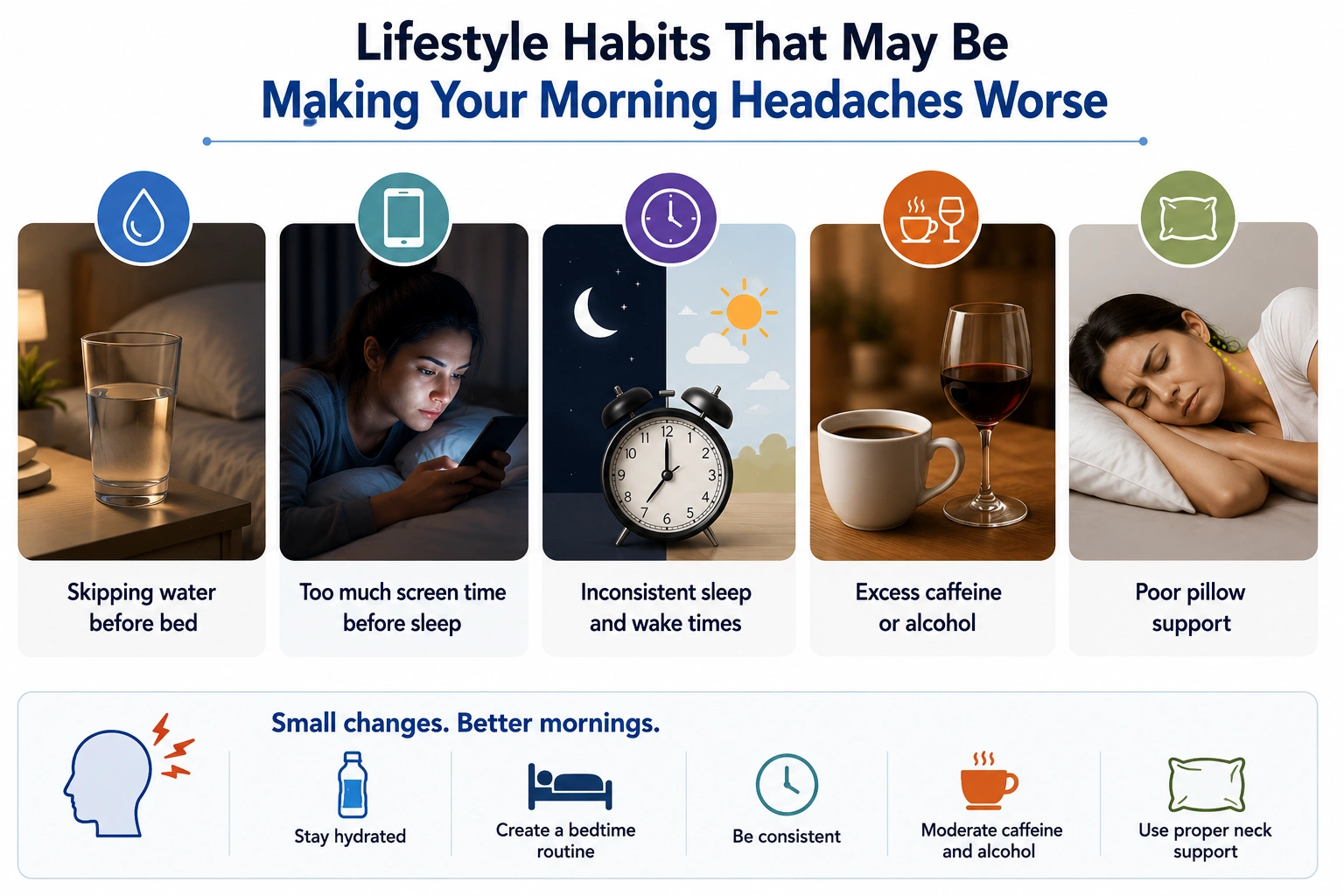
Beyond medical causes, certain daily habits can quietly contribute to how often and how intensely you wake up with head pain:
Other factors that may contribute include sleeping in an uncomfortable position, changing your normal sleep schedule, or relying frequently on pain medication for recurring headaches.
These factors don't require a diagnosis to address, but they're worth evaluating if your morning headaches feel routine.
An occasional headache after waking is usually not concerning. But waking up with a headache repeatedly can be a sign that something is affecting your sleep, hydration, medications, or overall health.
Pay attention to how often the headaches occur, how long they last, where the pain is located, and whether symptoms such as snoring, jaw pain, nausea, dizziness, or daytime fatigue occur at the same time. Keeping track of these patterns can help a healthcare provider identify possible triggers.
Most morning headaches have a manageable cause, but some require urgent evaluation. Seek care right away if you experience:
Some headache situations don't need an ER but do need same-day attention. Seek medical help if:
Recurring morning headaches are not something you should normalize or push through. They're a pattern worth paying attention to, one that often has a clear, treatable cause once identified. Whether it's how you're sleeping, how your blood pressure is trending, or something your body has been quietly signaling for a while, addressing it early makes a real difference in how you feel day to day.
If morning headaches have become part of your routine, it's time to find out why. At Metro Urgent Care, our board-certified physicians can evaluate your symptoms, check your blood pressure, and help identify what's driving the pattern, all on the same day, no appointment needed. With three convenient locations across Chicago and La Grange, getting answers has never been easier.
Contact us today and take the first step toward actually feeling rested when you wake up.
It's usually tied to an underlying cause, such as sleep apnea, dehydration, teeth grinding, high blood pressure, migraines, or medication overuse, that a provider can help identify.
Yes, and alcohol or caffeine the evening before can make it worse by increasing fluid loss overnight.
They can be, especially if you also snore loudly, wake up gasping, or feel unrested despite a full night's sleep.
If they're happening most mornings, getting worse over time, or coming with dizziness, nausea, or neurological symptoms, see a provider.
Yes, Metro Urgent Care can evaluate your symptoms, check for contributing causes, and refer you for further care if needed, no appointment required.
An uncomfortable sleeping position can place strain on the neck and shoulder muscles and contribute to tension-related head pain. A pillow that provides appropriate neck support may help if muscle tension is contributing to your morning headaches.
High blood pressure does not usually cause noticeable symptoms, but very high blood pressure can be associated with headache. If you frequently wake up with headaches or have risk factors for hypertension, having your blood pressure checked can help rule out a possible contributor.
Getting enough hours of sleep does not always mean you are getting quality sleep. Sleep apnea, teeth grinding, fragmented sleep, dehydration, migraines, and other factors can cause headaches even after a full night's sleep.


Stay protected this flu season!


