





Many parents schedule their child's school sports physical right before the first game, assuming that is when it matters most. In reality, practice usually starts weeks earlier, often involving the same conditioning drills, running, and contact the season itself will include. That timing gap means a child could begin demanding practices before a health concern has been caught or before the required clearance paperwork is even on file.
Completing a pediatric sports physical before the first day of practice, rather than waiting until closer to game day, gives your child's provider time to identify potential concerns early and gives your family time to handle any follow-up care or forms without racing a deadline.
A sports physical, also called a pre-participation physical evaluation (PPE), is a medical exam that determines whether a child is healthy enough to safely participate in a specific sport or activity. It is narrower in scope than a complete annual wellness exam, which reviews a child's overall health, growth, and development over the past year.
A sports physical instead focuses specifically on the physical demands of the sport in question, screening for anything that could put a young athlete at risk during practice or competition, such as heart conditions, breathing issues, or joint problems a general checkup might not specifically evaluate.
Waiting until closer to game day to schedule a sports physical overlooks how demanding practice itself can be from day one.
Conditioning drills, running, strength training, and contact activities often begin at the very first practice, sometimes weeks before a season's first game. These activities place real physical demands on a child's body from day one, and injuries or health complications can occur just as easily during practice as they can during an actual game, which is why waiting until game day is often too late.
A sports physical can catch issues that might not be obvious day to day but could become significant under the physical strain of practice, including:
Catching these early means they can be addressed before your child is put in a demanding physical situation.
Some children need additional testing, treatment, rehabilitation, or medical documentation before they are cleared to participate. Scheduling the physical well before practice starts builds in time for that follow-up, rather than discovering a concern the week practice begins and scrambling to fit in appointments. Waiting until the last minute risks your child missing practices entirely while clearance is pending.
Most schools, leagues, and camps require a completed physical form and medical eligibility documentation before a child can participate, and some will not allow a child to practice at all without it on file. Requirements and deadlines vary by school, league, and sport, so it is worth confirming your program's specific rules early rather than assuming a general form will automatically be accepted.
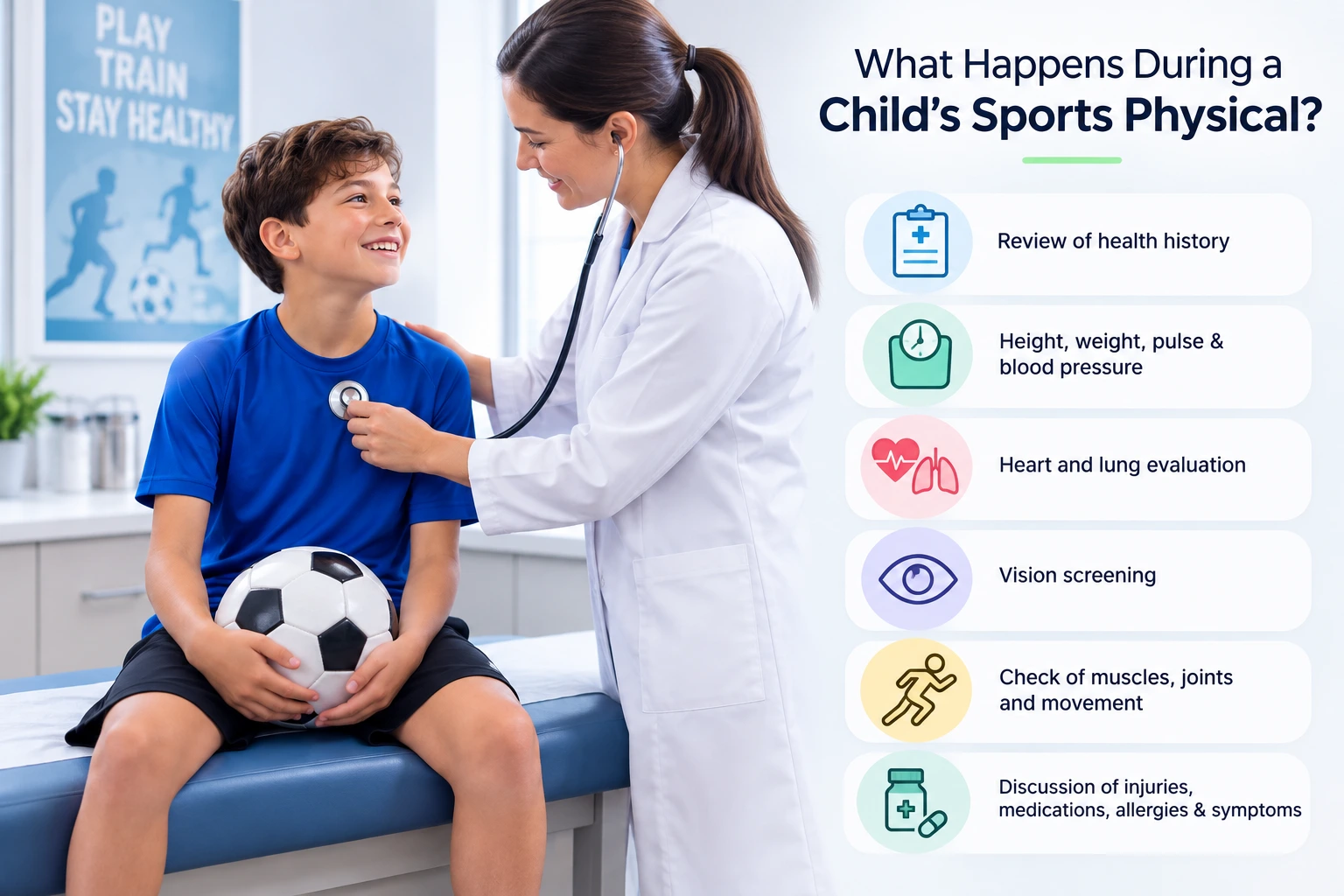
A sports physical typically combines a review of your child's health background with a hands-on exam focused on athletic readiness. During the visit, expect:
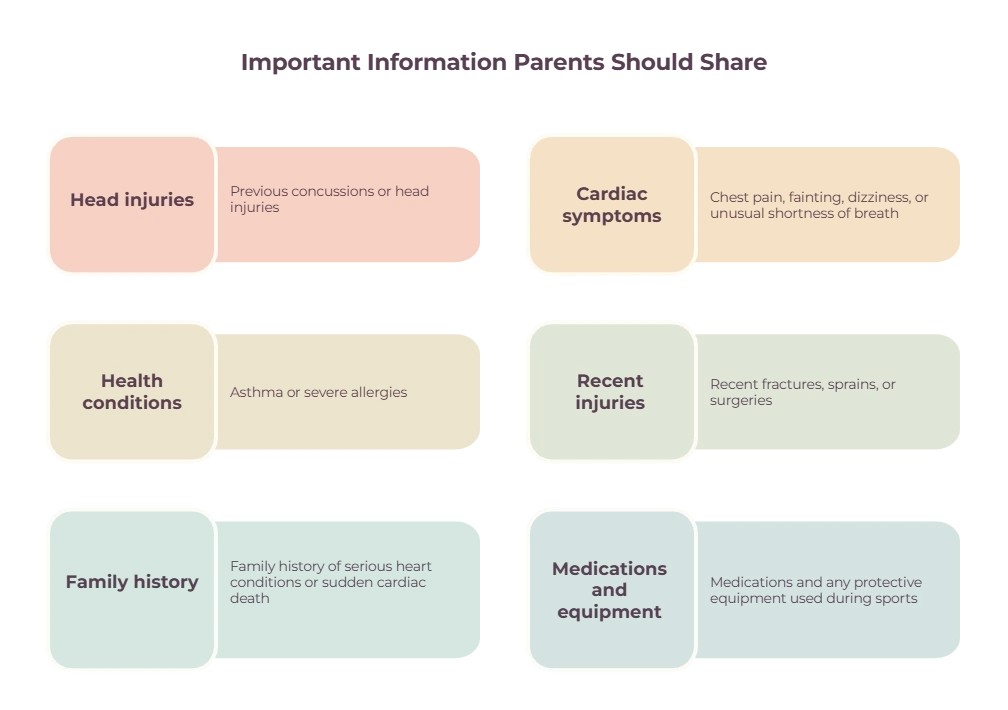
Sharing a complete health picture helps the provider give an accurate clearance. Be ready to discuss:
No exam can guarantee that a child will not get injured while playing a sport. What a sports physical does provide is a clearer picture of your child's current health, helping identify risks, guide any necessary precautions, and determine whether participation is appropriate right now. It is one part of keeping a young athlete safe, not a substitute for proper training, protective equipment, or attentive coaching.
Finding a concern during a sports physical does not automatically mean your child will be excluded from sports. Depending on what is found, a provider may recommend one of several outcomes:
Avoid waiting until the last minute before tryouts or the first practice. The American Academy of Pediatrics recommends scheduling the evaluation at least six weeks before the first practice, which allows enough time to address any concerns the exam turns up. Before your visit, check the physical form's validity period and your program's submission deadline, since some schools and leagues only accept forms completed within a certain window.
Bringing the right paperwork to the appointment helps avoid a follow-up visit just to complete forms. Plan to bring:
The safest time to complete a sports physical is before training and practice begin, not in the days leading up to the first game. Scheduling early gives your child's provider time to catch potential health concerns, gives your family time to handle any necessary forms or follow-up care, and helps your child start the season prepared, medically cleared, and ready to play alongside their teammates.
Metro Urgent Care provides same-day sports physicals with no appointment necessary, so your child can complete the exam, paperwork, and clearance form in a single walk-in visit. Our board-certified providers know what schools, leagues, and camps require and can help your family stay ahead of practice start dates.
Contact us today.
Most sports physicals take about 15 to 20 minutes, though timing can vary depending on your child's health history.
No, a sports physical focuses specifically on safe participation in a sport, while a wellness exam covers a child's overall health more broadly.
This depends on your child's school or program's specific policy, so it's best to confirm with them directly before practice starts.
A provider may recommend precautions, temporary restrictions, or a referral to a specialist rather than fully excluding your child from sports.
Coverage varies by plan, so it's worth checking with your insurance provider or asking our team when you schedule.


Stay protected this flu season!


