





Is this cut deep enough for stitches? It is the first question most people ask after a carving knife slips, and the answer is time-sensitive. Stitches work best when placed early, and waiting until tomorrow to decide can take that option off the table.
Pumpkin carving sends plenty of people to urgent care every October. Most injuries land on the hands and fingers, and they range from shallow nicks to deep slices that reach tendons. A few quick checks can tell you which one you are dealing with.
A pumpkin is wet, slick, and stringy inside. Blades skid on that surface, and the hand holding the pumpkin is usually the one in the path.
The thumb, index finger, and palm take most of the damage. Those areas sit close to nerves and tendons, so a cut that looks small on the surface can still go deep.
Head to urgent care the same day if you notice any of these:
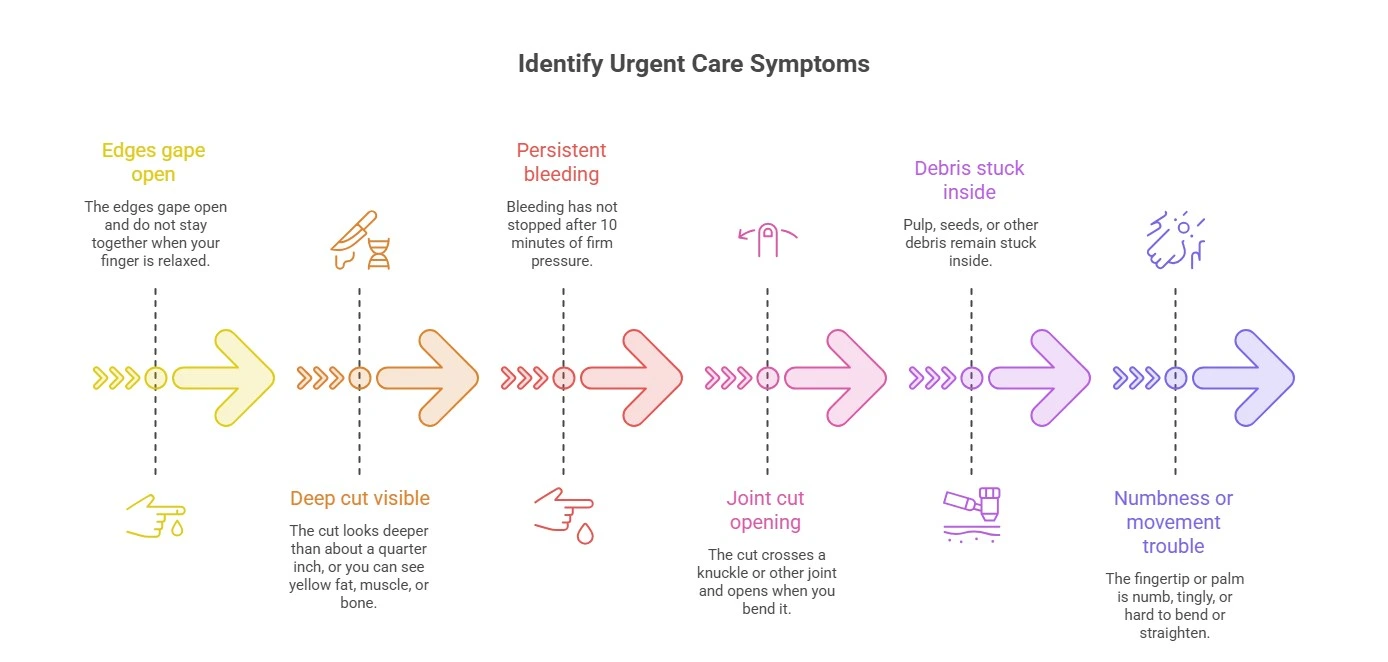
Numbness or trouble moving a finger deserves extra attention. It can mean a nerve or tendon was injured, and those injuries need prompt evaluation.
Call 911 or go to the nearest emergency room if you have:
If part of a finger is cut off, wrap it in clean, damp gauze and seal it in a bag. Keep the bag cool on ice, but do not place the piece directly on ice.
Sooner is better. Wounds closed within several hours generally carry a lower infection risk, and many providers hesitate to close a cut once about 24 hours have passed, because bacteria have had time to settle in.
Hands carry more bacteria than most body areas. An older or heavily contaminated cut may be cleaned and treated without being closed. If you are unsure, get it checked the same day.
A provider checks the depth of the cut, tests sensation and movement in the finger, and looks for debris or a broken blade tip. On-site X-ray can help locate small fragments.
The wound is then cleaned thoroughly and numbed. Depending on its location and depth, closure may involve stitches, skin glue, staples, or closure strips. Your tetanus status is reviewed at the same visit.
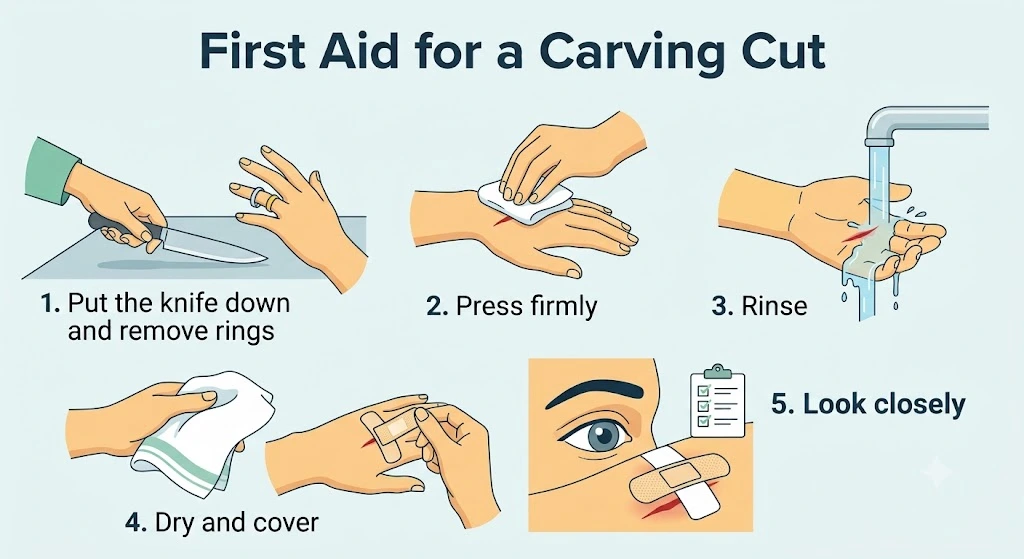
Pumpkins grow in soil, and carving tools often sit in garages. Treat a carving cut as a dirty wound.
Adults generally need a tetanus booster after a dirty or deep wound if the last one was more than 5 years ago. For a clean, minor cut, the window is 10 years. Not sure when you had yours? Ask when you are seen.
Keep the bandage clean and change it daily, or sooner if it gets wet. Stitches on the hand typically come out in about 10 to 14 days, and your provider will give you a date.
Watch for spreading redness, warmth, throbbing pain, pus, or fever. Those can signal infection, which our post on infection risks from lacerations explains in detail. Our tips on preventing wound infections cover day-to-day care.
Kids heading out afterward? Our Halloween safety tips for children cover trick-or-treat night.
A carving cut is easy to brush off, especially with a party on the calendar. Ten minutes of pressure, rinsing, and a careful look usually tells you what to do next. If the answer is unclear, a quick evaluation is the safer call.
Metro Urgent Care welcomes walk-in patients with cuts at our Fullerton Ave and Montrose Ave clinics in Chicago and at our La Grange location. Halloween falls on a Saturday this year, and our Fullerton clinic is open Saturday morning.
Call ahead or contact us with questions. We also treat injuries in children through our pediatric care services.
Yes, if it is shallow, the edges stay together, and bleeding stops quickly with pressure.
Apply firm, steady pressure for 10 full minutes without lifting the cloth to check.
Often, because many providers avoid closing a cut after about 24 hours, so get seen the same day.
Possibly, if your last booster was more than 5 years ago for a dirty or deep wound, or more than 10 for a clean, minor one.
Yes, children can be evaluated for cuts at Metro Urgent Care, and an adult should handle all pumpkin cutting.


Stay protected this flu season!


