




Flu season in Chicago arrives fast once temperatures drop, kids head back into crowded classrooms, and holiday gatherings bring families together indoors. Many people wait to think about a flu shot until they hear about outbreaks nearby or start feeling run down themselves, but by then, the ideal window for protection has often already passed. Getting vaccinated on the right timeline, not too late and not without a clear plan, makes a real difference in how well you're protected once flu activity picks up across the city.
Find out when Chicago's flu season starts, when to get your 2026 flu shot, who should prioritize it, and where to walk in today.
Flu season in Illinois typically begins in October, though cases can start appearing as early as September, especially once the weather cools and people spend more time indoors together. Chicago's cold winters and dense, transit-heavy population create ideal conditions for the virus to spread quickly once it takes hold, since close contact on public transit, in schools, and in workplaces gives influenza plenty of opportunities to move from person to person.
CDC data shows flu activity most often peaks between December and February, meaning the busiest, highest-risk stretch of the season is still months away for anyone reading this in early fall. That gap is exactly what makes September such a valuable window. Getting vaccinated now means your protection is already established before flu activity starts climbing, and you also sidestep the rush that tends to hit pharmacies and clinics once the weather turns cold and everyone remembers their flu shot at the same time.
Timing your flu shot well comes down to a few practical realities.
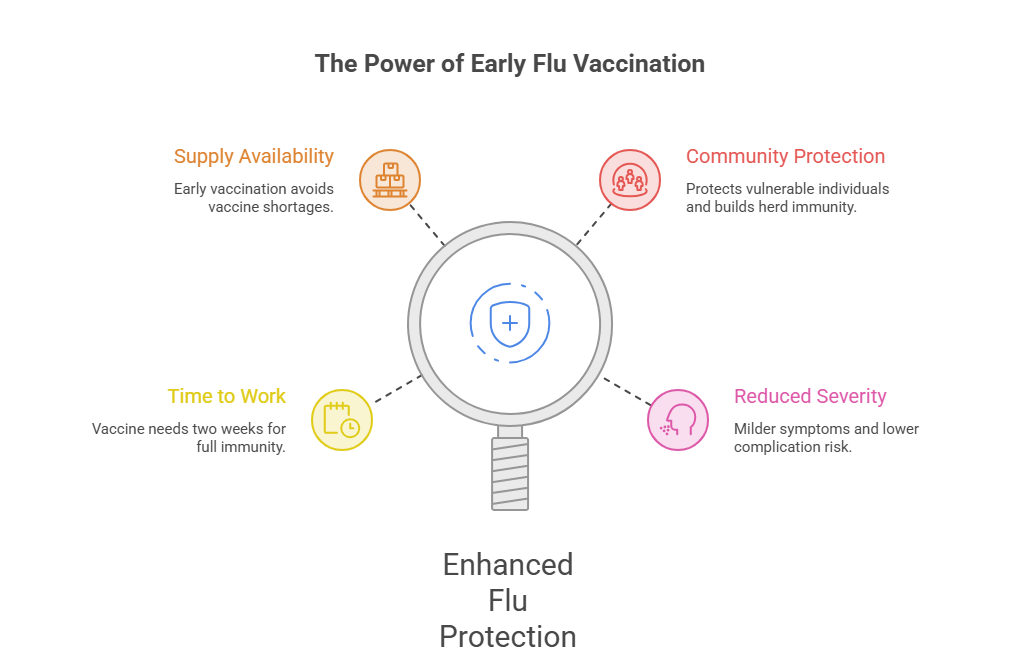
The flu vaccine takes about two weeks after injection to build full immunity, since that's how long your body needs to develop protective antibodies. Getting vaccinated in September means you're fully protected before flu activity typically starts climbing in October and November, rather than being caught mid-buildup once cases are already circulating.
Pharmacies and clinics can run short on vaccine stock as flu season peaks and demand spikes, particularly around the holidays when everyone tries to schedule a shot at once. Getting vaccinated early, before that rush, means you can get in on your own schedule instead of calling around for an open appointment.
Vaccinating yourself early also protects the people around you who cannot get vaccinated or who face higher risk, including infants under six months, elderly family members, and anyone who is immunocompromised. This community-wide protection, often called herd immunity, is especially relevant during pregnancy too, since a flu shot protects both the pregnant person and, through passive immunity, the baby in the months after birth.
No vaccine offers complete protection, but people who do get the flu after being vaccinated tend to experience milder symptoms and a lower risk of complications like pneumonia or hospitalization, compared with those who skip the shot entirely. Since it takes time for that protection to build, getting vaccinated early gives your body the best chance to benefit from it once flu activity picks up.
The CDC recommends an annual flu shot for nearly everyone six months and older, but a few groups in particular benefit from not delaying it this fall:
Getting a flu shot is quick and straightforward, usually taking just a few minutes and far less uncomfortable than most people expect. Afterward, you may notice a few mild, temporary effects as your immune system responds:
These typically resolve within a day or two without any treatment. One myth worth clearing up: the flu shot cannot give you the flu. It contains an inactivated virus that cannot cause infection, so any mild symptoms afterward are your immune system building protection, not an active illness.
The best time to get your flu shot is now, before flu activity picks up across schools, workplaces, and anywhere people gather indoors as the weather turns colder.
Metro Urgent Care makes it simple: walk in at any of our three Chicago-area locations, Fullerton Ave, Montrose Ave, or La Grange, and one of our board-certified physicians can have you vaccinated in minutes, no appointment necessary. Most insurance plans cover the vaccine at no out-of-pocket cost.
Stop by today and get protected before flu season takes hold.
September or early October is ideal, ahead of peak flu season and before vaccine supply and appointment availability get tight.
About two weeks, since that's how long your body needs to build full immunity after vaccination.
Yes, Metro Urgent Care offers walk-in flu shots with no appointment necessary at all three of our locations.
Protection typically lasts through the full flu season, which is why the CDC recommends getting a new shot every year.


Stay protected this flu season!