




Most of us expect a bit of squinting when stepping into bright sunlight, but what if your living room lamp or laptop screen starts to feel like a spotlight? This discomfort, known medically as photophobia, is a common symptom that ranges from a minor annoyance to a debilitating hurdle. While it can be unsettling, light sensitivity is often a signal from your body rather than a permanent condition. By identifying your specific triggers and recognizing key warning signs, you can protect your vision and find lasting relief.
Let’s understand the common triggers of photophobia and recognize symptoms that require prompt evaluation.
Photophobia refers to abnormal sensitivity or intolerance to light. Despite its name, it does not mean a fear of light. Instead, it describes discomfort or pain triggered by exposure to natural or artificial light sources.
It is important to recognize that photophobia is a symptom, not a standalone diagnosis. The sensitivity typically occurs because of irritation, inflammation, dryness, injury, or neurological involvement.
Occasional sensitivity, such as after leaving a dark room, is normal. However, persistent discomfort, worsening symptoms, or sudden sensitivity to light may indicate an underlying condition that warrants evaluation.
Several everyday and medical factors contribute to the causes of sensitivity to light.
1. Digital Eye Strain and Screen Exposure: Prolonged use of computers, smartphones, and tablets is one of the most frequent contributors to eye discomfort. Extended screen time can:
By the end of the day, your eyes may feel irritated and overly sensitive to both natural and artificial light.
2. Eye Infections and Inflammation: Inflammation increases the eye’s sensitivity to light. Common causes include:
When the eye’s surface or internal structures become inflamed, light exposure can intensify discomfort. Redness, discharge, swelling, or pain may accompany the sensitivity.
3. Migraines and Neurological Triggers: Light sensitivity is a well-recognized symptom of migraines. In some cases, it appears before the onset of head pain.
Migraine-related photophobia differs from surface eye irritation. It often includes:
Because migraines involve the nervous system, the sensitivity originates from altered light processing in the brain rather than the eye itself.
4. Dry Eye Syndrome: Dry eye syndrome significantly affects light tolerance. A stable tear film protects the eye’s surface. When tears evaporate too quickly or are insufficient, the surface becomes irritated and more sensitive.
Environmental factors such as air conditioning, wind exposure, and smoke can worsen symptoms.
5. Eye Injuries or Recent Procedures: Corneal abrasions, foreign bodies in the eye, or chemical exposure can cause sudden sensitivity to light. Even minor eye injuries may result in significant discomfort. Sensitivity following eye procedures is also common and typically improves as healing progresses. However, worsening pain or persistent symptoms should be evaluated.
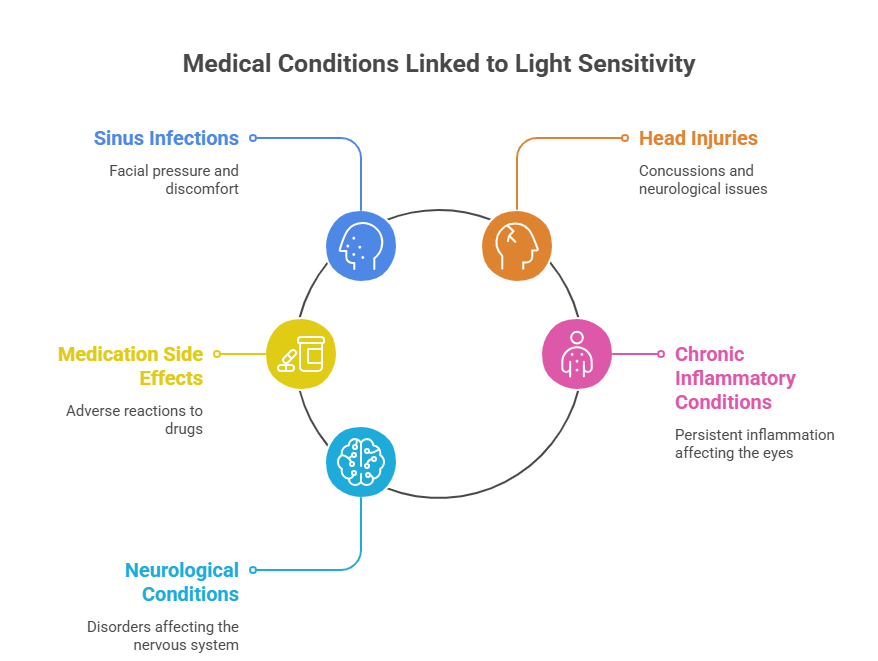
In some cases, photophobia is associated with broader medical concerns, including:
If you are wondering, “What causes photophobia?”, the answer may involve systems beyond the eye itself.
While many cases are mild, some symptoms require immediate attention. Seek care if you experience:
These warning signs may indicate infection, inflammation, or neurological issues that should not be delayed.
If symptoms interfere with daily activities such as driving, reading, or working, medical evaluation is appropriate. Urgent care centers can assess non-emergency eye concerns efficiently.
An evaluation may include:
Early assessment helps prevent progression and ensures appropriate treatment.

Diagnosis focuses on determining why your eyes are reacting this way. A clinician will evaluate:
Rather than simply masking discomfort, proper diagnosis ensures the underlying cause is addressed.
Treatment depends on the underlying condition and may include:
Most cases improve once the primary cause is treated.
You can reduce your risk of recurring symptoms by:
Small, consistent habits can make a noticeable difference.
Eye sensitivity to light is common, but it shouldn’t be dismissed, especially if it’s persistent or severe. While many cases are linked to dry eye or screen strain, others may signal infection, inflammation, or neurological concerns.
Listening to your symptoms and seeking timely evaluation can help protect both your comfort and your vision.
Metro Urgent Care offers comprehensive assessments for sudden or persistent light sensitivity. We evaluate your symptoms carefully, determine possible underlying causes, and provide targeted treatment or referrals when needed. Our goal is to restore comfort quickly while ensuring your eye health is properly addressed.
Contact us to schedule your visit today for professional care.
Light sensitivity itself typically does not cause permanent vision damage, but untreated underlying conditions like infections or inflammation may lead to complications if ignored.
It can be, especially if accompanied by severe pain, vision changes, redness, nausea, or recent injury. Sudden, intense symptoms should be evaluated promptly.
Stress and sleep deprivation can trigger migraines, worsen eye strain, and increase dryness, all of which may heighten light sensitivity.
Artificial lighting, particularly fluorescent or LED lights, can create glare or subtle flicker that strains already irritated or dry eyes.
Children may struggle to describe symptoms clearly, so persistent light sensitivity should be evaluated promptly to rule out infection, inflammation, or neurological concerns.


Stay protected this flu season!


