





It is easy to dismiss early symptoms, especially when they appear mild or manageable. Many people choose to wait, hoping the issue will resolve on its own. While this approach may work in some cases, certain symptoms require timely medical evaluation to avoid unnecessary complications.
Knowing when to see a doctor immediately can help prevent a minor concern from becoming a more serious condition. Not every situation calls for an emergency room visit, but waiting too long is not always the right choice either. In many cases, same day medical care provides a practical and efficient solution, offering prompt attention without the delays associated with traditional appointments.
Read on to explore key symptoms that should prompt you to seek care without delay.
Timely medical care plays an important role in maintaining overall health. Addressing symptoms early can:
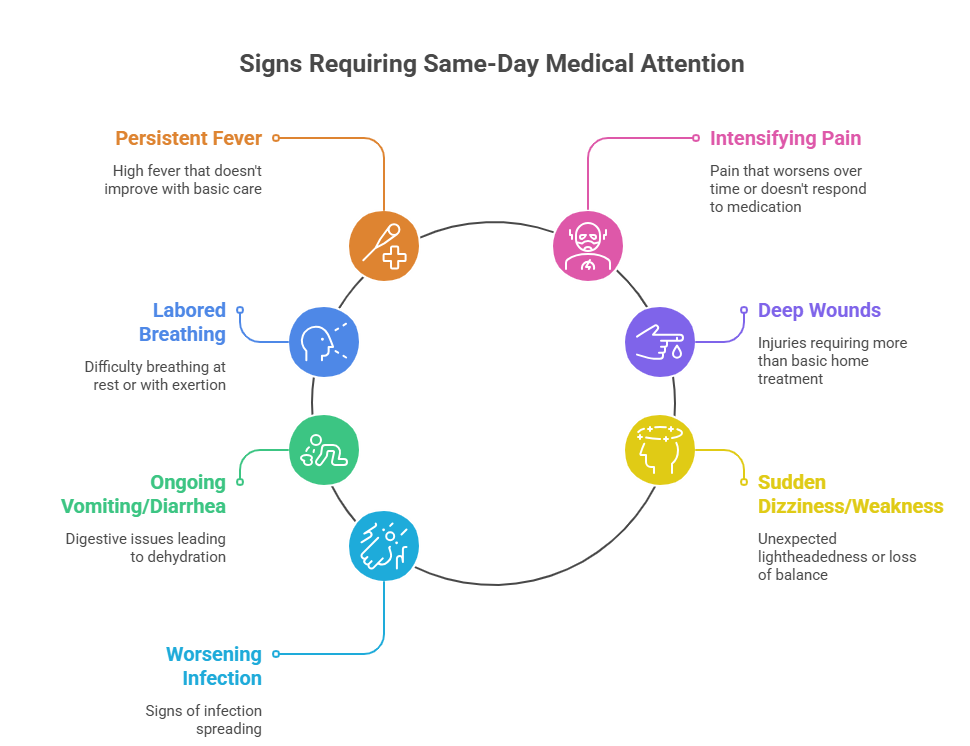
Delaying care often allows conditions to progress, making them more difficult to manage. Below are seven signs that indicate the need for prompt medical evaluation.
1. High Fever That Persists: A sustained fever above 101°F in adults can be a sign of infection that requires medical attention. In children, fever accompanied by unusual tiredness, irritability, or reduced responsiveness should be evaluated promptly.
Persistent or recurring fever is not something to overlook, especially when it doesn’t improve with basic care, understanding the possible causes of recurring fever and knowing when to see a doctor can help you take the right next step.
2. Pain That Intensifies or Does Not Improve: Pain that becomes more severe over time or does not respond to rest or over-the-counter medication may indicate an underlying issue. This includes abdominal discomfort, chest pain, or joint pain.
Seeking a same day doctor appointment ensures that the cause is identified early.
3. Breathing That Feels Labored or Unusual: Any noticeable change in breathing patterns should be taken seriously. Shortness of breath, wheezing, or a feeling of tightness in the chest may point to respiratory concerns such as infections or allergic reactions.
Understanding how to manage these symptoms of shortness of breath or wheezing can help you respond more effectively. When breathing becomes uncomfortable at rest, it requires urgent medical attention.
4. Wounds That Require More Than Basic Care: Injuries that involve deep cuts, continuous bleeding, or visible tissue damage should not be treated at home alone. Medical care may be needed for proper cleaning, closure, and prevention of infection.
Delaying treatment can affect healing and increase risk.
5. Ongoing Vomiting or Diarrhea: Digestive symptoms that persist beyond a day can lead to dehydration and electrolyte imbalance. This is particularly important for young children and older adults.
Same day medical care can help manage symptoms and prevent further complications.
6. Sudden Onset of Dizziness or Weakness: Unexpected dizziness and vomiting, lightheadedness, or weakness may be linked to underlying issues involving blood pressure, circulation, or neurological function.
If these symptoms occur suddenly or are accompanied by confusion or fainting, prompt evaluation is necessary.
7. Worsening Signs of Infection: Infections often begin with mild symptoms but can progress quickly. Increasing redness, swelling, warmth, or discharge from a specific area may indicate that the infection is spreading.
When combined with fever or pain, it is important to seek care without delay.
For symptoms that require attention on the same day but are not life-threatening, a walk-in clinic offers a reliable option. It is particularly useful when:
This setting allows for efficient diagnosis and treatment without unnecessary delays.
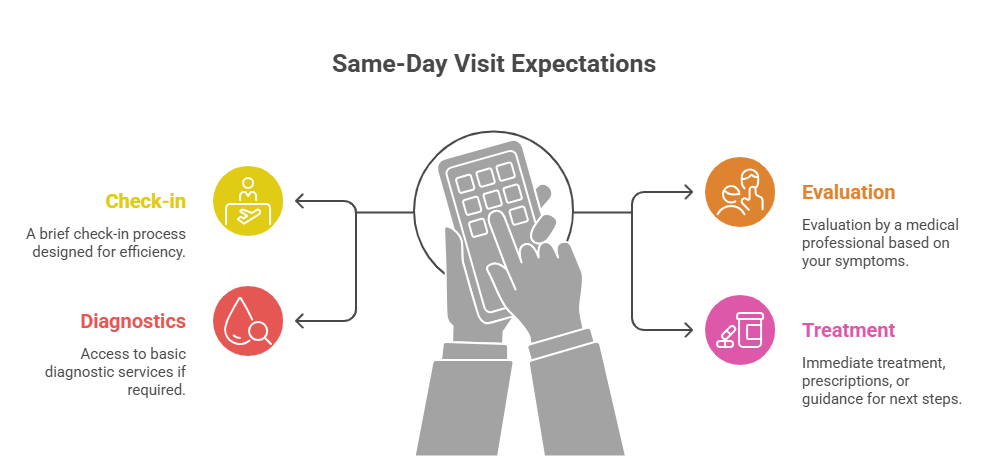
Visiting for a same day doctor appointment is typically straightforward:
This approach ensures that concerns are addressed promptly, providing both clarity and relief.
Symptoms do not always progress in predictable ways. What begins as a minor concern can develop into a more serious issue if left unaddressed. Recognizing the need for timely care is an important part of maintaining your health.
Choosing to act early can prevent complications and support a smoother recovery.
When symptoms show up unexpectedly, even a short delay can make a difference. Metro Urgent Care provides fast, same-day evaluations for concerning symptoms, helping you understand what’s happening and get the right care before it worsens.
Contact us today to be seen without delay and take control of your health.
If symptoms are persistent, worsening, or affecting your ability to function normally, it is advisable to seek care the same day.
Urgent care is appropriate when symptoms require prompt attention but are not severe enough for emergency services.
Persistent fever, increasing pain, breathing difficulty, ongoing digestive issues, and worsening infections should be evaluated promptly.
Yes, urgent care centers are equipped to manage a wide range of non-emergency conditions.
Choose urgent care for moderate symptoms needing quick evaluation, and the emergency room for severe or life-threatening situations.


Stay protected this flu season!


