





Walking pneumonia, or atypical pneumonia, is a deceptive lung infection. Its milder symptoms allow many patients to remain active, masking the seriousness of the underlying illness. Despite feeling well enough to "walk" around, this condition requires timely and specific medical intervention. Untreated, recovery can be prolonged, and transmission risks are high.
With the right treatment and some smart home habits, recovery can be smooth and much faster. Let’s break down exactly what it is, how it’s treated, and what you can do to help your body bounce back.
Walking pneumonia is a milder form of pneumonia typically caused by Mycoplasma pneumoniae, a type of bacteria that affects the respiratory tract. Unlike typical pneumonia, which can bring high fevers and severe breathing trouble, walking pneumonia tends to cause more subtle symptoms.
Common signs include:
Because walking pneumonia symptoms overlap with colds and bronchitis, many people don’t realize they’re dealing with pneumonia until it lingers far longer than expected.
Diagnosis usually starts with the basics: reviewing your symptoms, asking how long your cough has lasted, and checking for fever and breathing patterns. During the physical exam, your doctor may listen for abnormal lung sounds, such as crackles or wheezing, that suggest infection.
In some cases, further tests are needed:
These tests help determine the severity of the infection and prevent delays in walking pneumonia treatment.
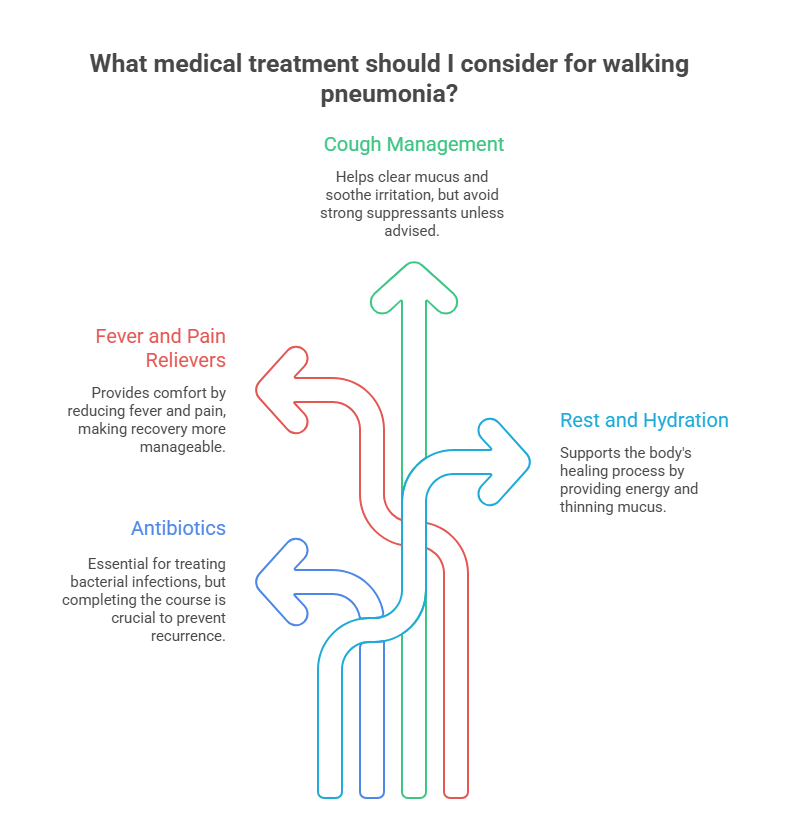
Because walking pneumonia is often caused by bacteria, antibiotics are typically the main form of treatment. Your medical healthcare provider will choose the most appropriate type based on your symptoms and overall health.
Even if you feel noticeably better after a few days, finishing the full prescribed course is crucial. Stopping too early can lead to a return of symptoms or reduced effectiveness of future treatments.
Over-the-counter medications can help ease the discomfort that comes with walking pneumonia. These medicines reduce fever, lessen chest soreness, and help you rest more comfortably, an important part of your recovery.
While they don’t treat the pneumonia itself, they can make the healing process far more manageable.
A lingering cough is one of the most common symptoms of walking pneumonia. Because coughing helps clear mucus from the lungs, strong suppressants are usually avoided unless your doctor advises otherwise.
Milder options, such as soothing syrups or expectorants, may be recommended to help loosen mucus or calm irritation. Always follow your provider’s guidance, especially if your cough is productive.
Rest is not just helpful, it’s essential. Your body needs extra energy to fight the infection and repair irritated airways.
Hydration plays an equally important role by thinning mucus and preventing dehydration. Ideal choices include:
Together, rest and fluids form the foundation of a faster, smoother recovery.
Recovering from walking pneumonia isn’t only about taking medication, your daily habits play a major role in how quickly your body bounces back.
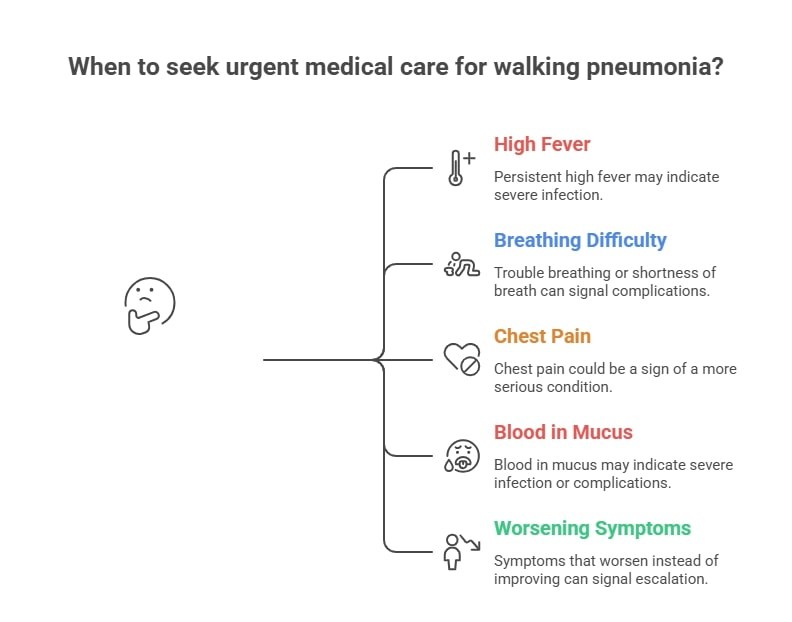
Walking pneumonia can escalate if ignored. Get urgent help if you notice:
These signs may indicate severe infection or complications.
Technically, you can, but you shouldn’t.
Pushing through delays recovery and increases the chance of spreading the bacteria to others. A few days of rest upfront often shortens the overall healing time.
A few simple habits can reduce your risk:
Prevention starts with strengthening your everyday habits.
As the year wraps up, your annual physical is more than a routine appointment, it’s a chance to realign with your health goals and step into the new year feeling confident and prepared. A simple checkup today can prevent bigger issues tomorrow. Give yourself the gift of clarity, peace of mind, and a healthier start to the year ahead. Your future self will thank you.
Even mild pneumonia can slow you down if left untreated. At Metro Urgent Care, our providers offer timely evaluation, safe treatment, and guidance for faster recovery. From expert care to practical tips for managing symptoms at home, we’re here to help you breathe easier and get back to your daily life.
Visit us today for personalized support.
Reinfection can occur if immunity is low or there is renewed exposure. Following treatment and maintaining good health habits reduces the likelihood of recurrence.
Incidence tends to rise during fall and winter, when respiratory infections spread easily in indoor environments and immune defenses can be temporarily weakened.
School-aged children and teens are at higher risk due to frequent close contact in classrooms, shared spaces, and their developing immune systems.
Preexisting conditions like asthma or chronic allergies can intensify symptoms, prolong recovery, and increase discomfort due to heightened airway sensitivity.
Without proper care, the infection may progress, causing severe pneumonia, persistent coughing, breathing difficulties, or secondary infections that require more intensive treatment.


Stay protected this flu season!


