





A fever is typically a temporary response to a common illness, such as a cold or the flu. In most cases, a few days of rest and proper hydration are enough for the body to recover. However, when a fever disappears only to return a week later, or occurs consistently every few months, it is classified as a recurring fever.
While an isolated fever is a normal part of the immune response, a fever that keeps coming back often indicates an underlying health issue that requires professional evaluation. Understanding the potential causes of these cycles is essential for identifying the root of the problem and ensuring proper treatment.
A recurring (or recurrent) fever is defined as multiple episodes of elevated body temperature that occur over a period of time, separated by intervals where your temperature returns to its normal baseline.
Unlike a standard one-time illness where you get sick and then recover, a recurring fever follows a pattern. You might feel perfectly healthy for days, weeks, or even months, only for the fever to strike again without an obvious new trigger like a fresh cough or a strep throat or sore throat symptoms.
When a fever is persistent or cyclical, it usually means your immune system is stuck in an "on" position or is failing to fully clear a problem. Ignoring these episodes can be risky. Beyond the exhaustion and discomfort, delaying a medical evaluation might allow a minor issue to evolve into a chronic condition. In short: your body is signaling that it needs assistance, and it is important to seek a diagnosis.
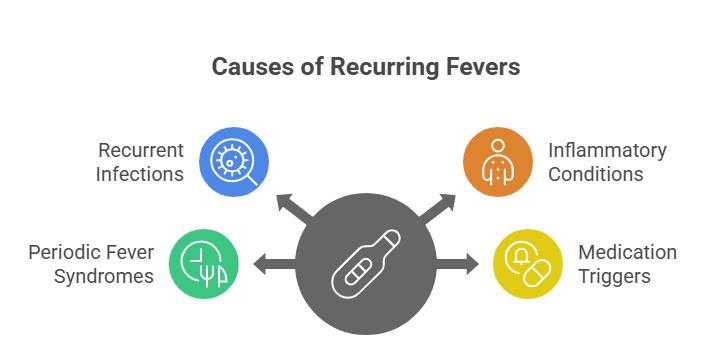
There is rarely a "one size fits all" explanation for why fevers return, but they generally fall into a few specific categories.
Sometimes, an infection hasn't been fully eradicated. Common culprits include:
In conditions like Rheumatoid Arthritis or Lupus, the body’s immune system mistakenly attacks its own tissues. This systemic inflammation often manifests as a recurring fever accompanied by joint pain or fatigue, highlighting the importance of boosting and protecting the immune system during winter months.
These are often genetic and more common in children. Conditions like PFAPA (Periodic Fever, Aphthous Stomatitis, Pharyngitis, and Adenitis) cause predictable cycles of high fever that repeat every 3–5 weeks.
In some cases, the fever isn't an illness at all. Certain medications can cause "drug fevers," and chronic dehydration or heat exhaustion can prevent the body from regulating its temperature correctly.
It is common for children to have frequent fevers because their immune systems are developing through exposure at daycare and school. However, parents should watch for pediatric warning signs such as lethargy, refusal to drink fluids, or fevers that occur alongside a specific rash.
In adults, a fever that keeps coming back is less likely to be a simple viral transmission. It often points toward chronic infections, autoimmune triggers, or high levels of physiological stress that weaken the immune response.
You should consult a healthcare provider if you experience:
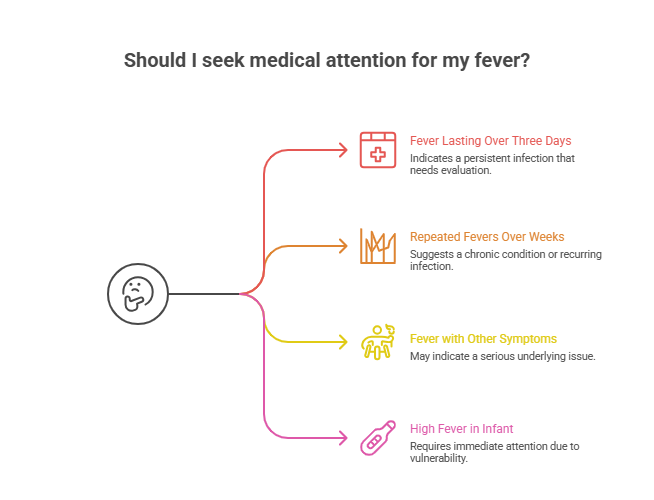
If your primary doctor is unavailable, Urgent Care is an excellent resource for evaluating recurring fevers. They can provide diagnostic testing, such as blood work or imaging, to rule out common infections causing fever.
Note: Seek Emergency Care immediately if the fever is accompanied by a stiff neck, severe headache, confusion, or difficulty breathing.
During a medical evaluation, a healthcare provider will typically perform the following:
To assist your provider in making an accurate diagnosis, keep a fever log. Record when each fever starts, the highest temperature reached, how long it lasts, and any accompanying symptoms like joint pain or digestive issues. This information is often vital in identifying a pattern.
A recurring fever is a symptom that warrants a thorough medical investigation. Whether the cause is a lingering infection, an inflammatory condition, or a periodic syndrome, seeking a timely evaluation can prevent complications and lead to a more effective treatment plan. Do not wait for the symptoms to resolve on their own if they have already shown a pattern of returning.
Repeated fevers shouldn’t be ignored. At Metro Urgent Care, our experienced team provides thorough evaluations and convenient diagnostics to uncover what’s driving your symptoms. We focus on fast relief, accurate answers, and clear care plans, so you can feel confident about your health.
Contact us today for trusted medical support.
Severe emotional or physical stress can trigger psychogenic fevers or weaken the immune system, making the body more susceptible to frequent, repeat infections.
Fluctuations in thyroid function or hormonal shifts during the menstrual cycle can disrupt the body's internal thermostat, leading to periodic rises in temperature.
Frequent fevers often indicate the immune system is either overactive, as seen in autoimmune disorders, or struggling to fully clear a persistent infection.
While minor fluctuations occur, a consistent pattern of returning low-grade fevers usually suggests a hidden inflammatory issue that requires a professional medical evaluation.
Inadequate fluid levels prevent the body from cooling itself through sweat, which can result in intermittent temperature spikes until proper hydration is restored.
If you have a fever that returns repeatedly, monitor your temperature, stay hydrated, and seek medical evaluation. Recurring patterns often need diagnostic testing to identify the underlying cause.
In most adults, the flu lasts about 5–7 days, but fatigue can continue longer. If fever returns after initial recovery, it may indicate a secondary infection or another condition.
You can manage a fever at home by resting, drinking plenty of fluids, and using over-the-counter medications like acetaminophen or ibuprofen. Always follow dosage guidelines and consult a doctor if symptoms persist.


Stay protected this flu season!


