





Dehydration doesn’t stop when summer ends. During winter, children often drink less water while their bodies continue to lose fluids in less obvious ways. Cold air, indoor heating, and increased or shortness in breathing all contribute to fluid loss, while seasonal illnesses raise hydration needs even further. Because thirst cues are weaker in colder months, dehydration in winter can develop quietly, making it important for parents to stay mindful of hydration all season long.
Learn how cold air, indoor heating, and winter routines affect hydration in children.
Cold weather doesn’t stop the body from losing fluids, it just hides the process.
Cold air holds less moisture than warm air, which means every breath your child takes pulls moisture from their body. Add dry indoor heating to the mix, and fluid loss increases even more. Heated homes, classrooms, and play areas dry out the skin and airways, quietly increasing dehydration in cold weather.
Another factor is thirst, or rather, the lack of it. In winter, the body’s thirst response drops. Kids simply don’t feel as thirsty, even when their bodies need fluids. They may go hours without drinking water, especially during school or playtime.
Breathing cold air also causes extra fluid loss. Moisture escapes with every exhale, particularly during outdoor play or sports. Over time, this adds up.
Kids don’t naturally track hydration well. When they aren’t sweating visibly, they don’t think about drinking water. Winter clothes hide perspiration, so parents may not notice fluid loss either.
Spending more time indoors exposes children to dry, heated air for long periods. This constant low-level dehydration can creep in unnoticed.
Winter illnesses make the situation worse. Colds, flu, vomiting, diarrhea, and fever all increase fluid loss. A sick child who isn’t drinking enough is at high risk for dehydration causes in kids during winter months.
Infants and toddlers are especially vulnerable. Their bodies have less fluid reserve, and they can’t communicate thirst clearly. Fewer wet diapers may be the first sign something is wrong.
Several factors often overlap:
Together, these contribute to winter dehydration symptoms that may seem mild at first but can worsen quickly.
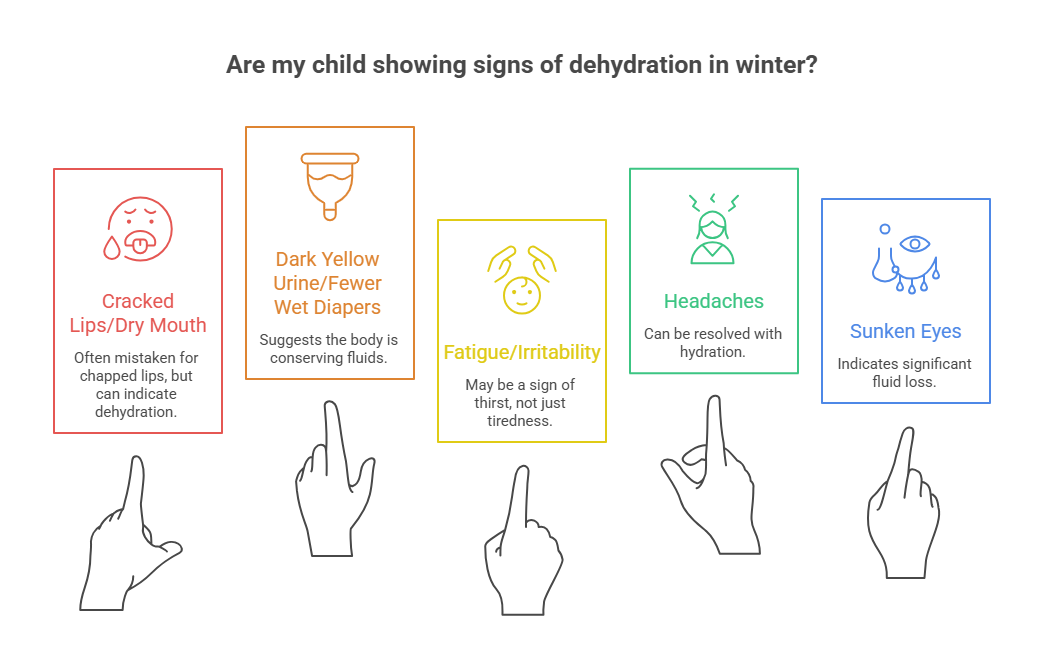
Because kids might not ask for a drink, parents need to play detective. You likely won't see the heavy sweating associated with summer, so you need to look for subtler winter dehydration symptoms.
Keep an eye out for these red flags:
Winter play still causes fluid loss. Running, sledding, skating, or snow play leads to sweating, even if it’s not obvious.
Heavy winter clothing traps heat, causing kids to sweat without realizing it. Because the sweat evaporates slowly, children may not feel damp or hot, but fluid loss is still happening.
Indoor sports add another layer of risk. Gyms and play centers are often heated, increasing sweating while kids remain unaware of their hydration needs.
You don't need to force-feed your child gallons of water, but you do need to be proactive.
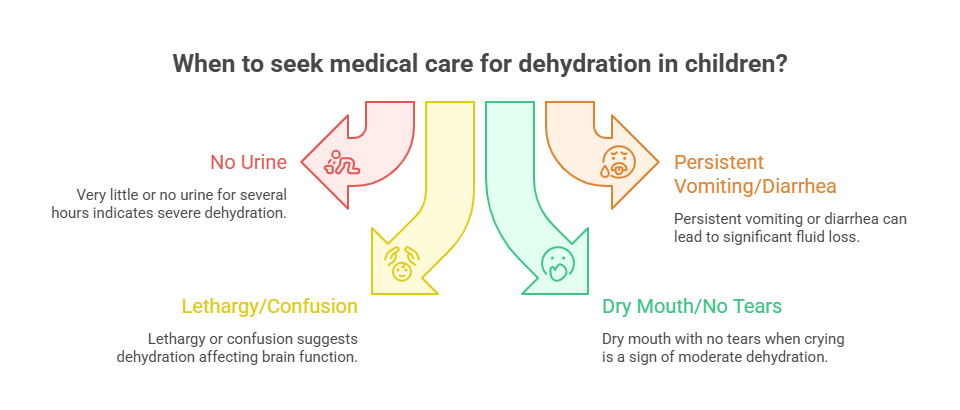
Some signs require medical attention, including:
Urgent Pediatric care can quickly assess dehydration in cold weather and determine whether oral fluids are enough or if IV hydration is needed.
Winter may feel gentler than summer, but dehydration doesn’t take a seasonal break. With colder air, indoor heating, and winter illnesses quietly increasing fluid loss, children need just as much attention to hydration during the colder months. A few simple habits, regular water breaks, nourishing foods, and early awareness, can go a long way in keeping kids comfortable, energized, and healthy all winter long.
Metro Urgent Care helps families manage winter-related dehydration with timely assessments and appropriate care. Our team focuses on identifying early signs, addressing underlying causes, and offering clear next steps for recovery and prevention. We’re committed to making care simple, reassuring, and effective.
Get in touch today for expert medical care.
Cold air, dry indoor heating, and reduced thirst increase fluid loss, making dehydration more likely even when children don’t feel sweaty or overheated.
Fluid needs vary by age and activity, but children should drink regularly throughout the day, even when they don’t feel thirsty.
Infants lose fluids faster and cannot communicate thirst, making them more vulnerable to dehydration, especially during illness or prolonged indoor heating exposure.
Low fluid levels can reduce circulation and digestion efficiency, leading to headaches, dizziness, fatigue, or mild stomach discomfort in children.
Juice and milk contribute fluids, but water remains essential for hydration, as sugary drinks may increase thirst without fully meeting hydration needs.


Stay protected this flu season!


