





An itchy, painful ear after a day of swimming is often the first sign of swimmer's ear, one of the most common ear conditions during pool and beach season. It develops when water becomes trapped in the ear canal after swimming, bathing, or frequent showers instead of draining out completely. Once that moisture lingers, it softens the skin lining the canal and creates the kind of environment where bacteria multiply easily, resulting in an ear infection after swimming.
Children and frequent swimmers are the most likely to be affected, since their smaller ear canals do not always drain water as easily as an adult's. The condition is uncomfortable, but it is also one of the more preventable ear conditions once parents know which habits actually reduce the risk.
Swimmer's ear, known medically as acute otitis externa, is an infection of the outer ear canal, the passageway that runs from the outer ear to the eardrum. It develops when water becomes trapped in the ear canal for an extended period, creating a moist environment where bacteria can multiply.
The ear canal has a natural layer of protective skin and a thin coating of earwax that help keep bacteria at bay. When moisture lingers in the canal, it can soften and weaken that skin, making it easier for bacteria to take hold. Swimmer's ear is different from a middle ear infection, which occurs deeper behind the eardrum and is not related to water exposure in the same way. It is also not contagious.
Anyone who spends time in the water can develop swimmer's ear, but some people are more prone to it than others. Children are particularly vulnerable because they tend to spend longer stretches in the water and may not dry their ears thoroughly afterward. Other factors that can increase the risk include:
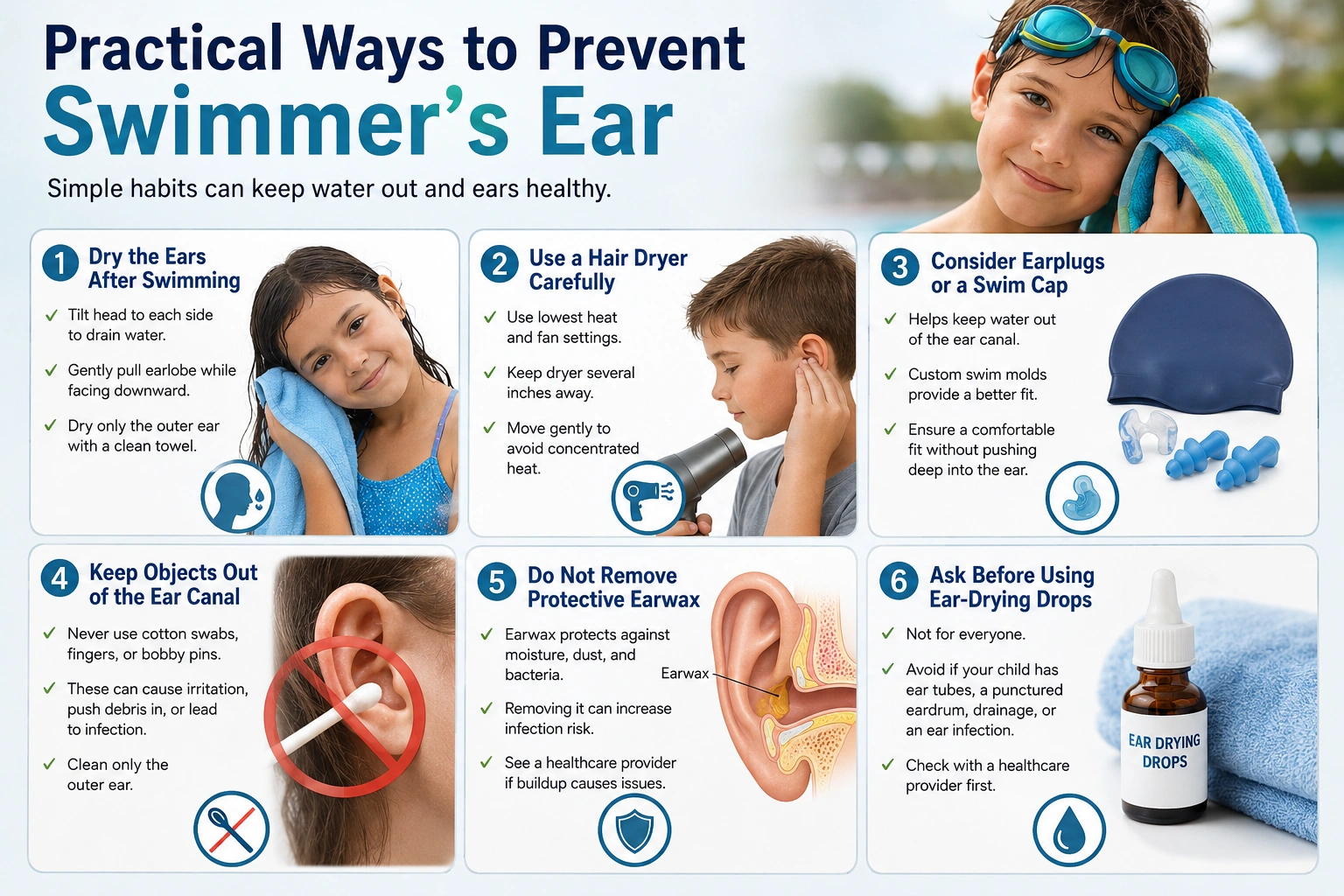
Most cases of swimmer's ear can be avoided with a few consistent habits. The key is removing moisture from the ear canal promptly and avoiding anything that could irritate or damage it.
1. Dry the Ears After Swimming: After your child gets out of the pool, lake, or ocean, have them tilt their head to each side to help trapped water drain out naturally. Gently pulling the earlobe in different directions while the affected ear faces downward can also encourage drainage. Once the water has drained, use a clean towel to dry only the outer ear. Avoid inserting the corner of the towel or any other object into the ear canal.
2. Use a Hair Dryer Carefully: A hair dryer set to the lowest heat and fan settings can help evaporate moisture from the ear canal. Hold the dryer several inches away from the ear and move it gently to avoid directing concentrated heat into the canal. This can be particularly helpful for children who frequently struggle with trapped water after swimming.
3. Consider Earplugs or a Swim Cap: For children who develop swimmer's ear repeatedly, properly fitted earplugs or a bathing cap may help keep water out of the ear canal during swimming. Custom swimming molds fitted by an audiologist or hearing care provider offer a more secure option than over-the-counter plugs. Whatever option you choose, it should fit comfortably without being pushed deeply into the ear canal.
4. Keep Objects Out of the Ear Canal: Cotton swabs, fingers, bobby pins, and similar objects should never be placed inside the ear canal. It may feel instinctive to try to dry the ear from the inside out, but these objects are more likely to irritate the ear canal's delicate skin, push debris further in, or cause small abrasions that make infection more likely. Cleaning should always stop at the outer ear.
5. Do Not Remove Protective Earwax: Earwax serves an important purpose. It helps protect the lining of the ear canal from moisture, dust, and bacteria. Removing it unnecessarily can leave the canal more vulnerable to infection. If earwax buildup appears to be trapping water or causing discomfort, a healthcare provider can assess whether it needs to be addressed and recommend a safe approach.
6. Ask Before Using Ear-Drying Drops: Over-the-counter ear-drying drops may be appropriate for some children who swim frequently. However, they are not suitable for everyone. These drops should not be used if a child has ear tubes, a punctured eardrum, active ear drainage, or an existing ear infection. Before using any ear drops for prevention, check with a healthcare provider to confirm they are safe for your child.
Well-meaning efforts to remove water or relieve an itchy ear can sometimes do more harm than good. Some of the most common missteps include:
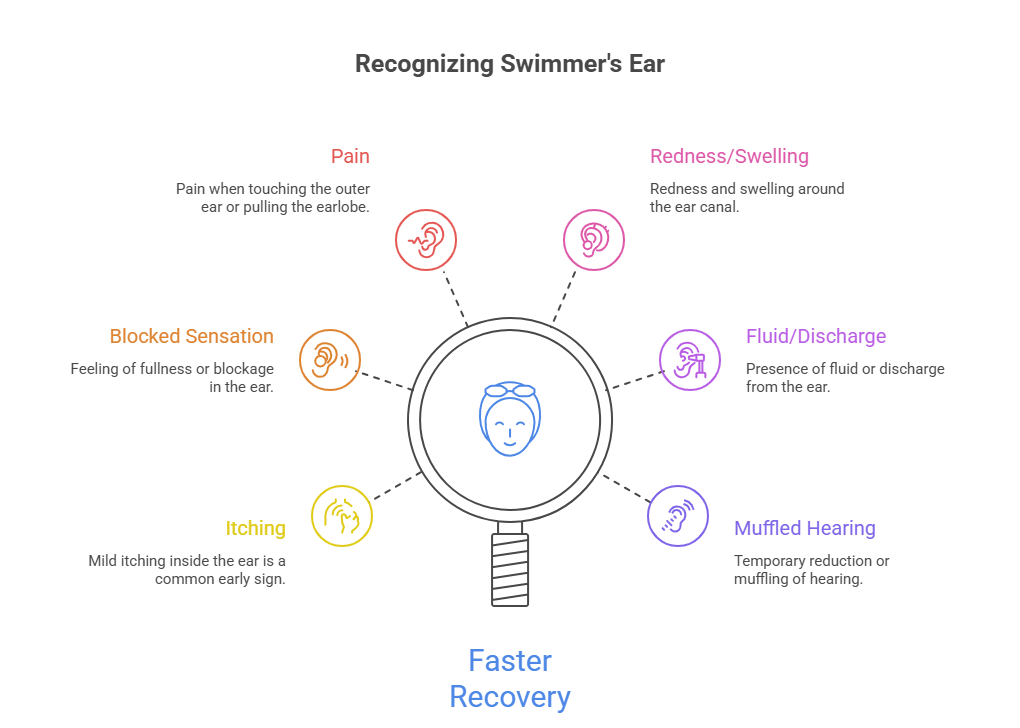
Swimmer's ear often starts with mild symptoms that can be easy to overlook. Catching them early generally means a faster and more straightforward recovery.
Signs to watch for include:
Home remedies alone are not enough to treat swimmer's ear once an infection has developed. If your child shows any of the following, having them evaluated by a healthcare provider is the right next step:
In most cases, a healthcare provider will recommend staying out of the water while swimmer's ear is being treated. Getting the ear wet during treatment can slow recovery and interfere with how prescription ear drops work. During treatment, follow the provider's instructions carefully regarding swimming, bathing, keeping the ear dry, and applying any prescribed drops. Once symptoms have resolved, your child's provider can advise on when it is safe to return to the pool.
Swimmer's ear is common, but most cases can be avoided with a few simple habits after time in the water. Drying the ears, keeping objects out of the canal, and checking with a provider before using drops are the most reliable steps. When symptoms do show up, getting them looked at early means a quicker recovery and fewer missed days of summer.
At Metro Urgent Care, we're here to help when your child needs it. If they're experiencing ear pain or drainage after swimming.
Contact us today to get your child evaluated and on the path to feeling better.
Tilt your child's head to each side and gently pull the earlobe to help drain trapped water, then dry only the outer ear with a clean towel.
Well-fitted earplugs can reduce the water entering the ear canal and lower the risk of swimmer's ear, though a poor fit can trap moisture instead, so it's worth having a provider check the fit.
They can be for some children, but drops should be avoided with ear tubes, a punctured eardrum, active drainage, or a current infection, so check with a provider first.
Many children with ear tubes can still swim with proper protection, though guidelines vary by tube type, so confirm with the provider who placed them.
Swimmer's ear usually causes pain when the outer ear is touched or pulled, while a middle ear infection more often brings fever and deeper ear pain, often following a cold.


Stay protected this flu season!


