





Acid reflux is something many people experience occasionally, but it can feel particularly uncomfortable at night. You might go to bed feeling fine, only to wake up with a burning sensation in your chest or a sour taste in your mouth. This happens when stomach acid flows back into the esophagus, irritating its lining.
Nighttime symptoms can feel more intense not necessarily because reflux is worse, but because your body position and slower digestion make it easier for acid to move upward. The result is disrupted sleep, discomfort, and fatigue the next day.
Read on to understand why acid reflux gets worse at night and what you can do about it.
There are a few practical reasons why reflux tends to flare up after you lie down.
When you are upright during the day, gravity helps keep stomach contents where they belong. At night, lying flat removes that advantage, making it easier for acid to travel into the esophagus.
In addition, swallowing naturally decreases during sleep. Swallowing helps clear acid from the esophagus, so less of it means acid stays in contact with the lining longer. Digestion also slows down in the evening, which can increase the chances of reflux if food is still in the stomach.
Understanding the causes can help you identify what might be triggering your symptoms.
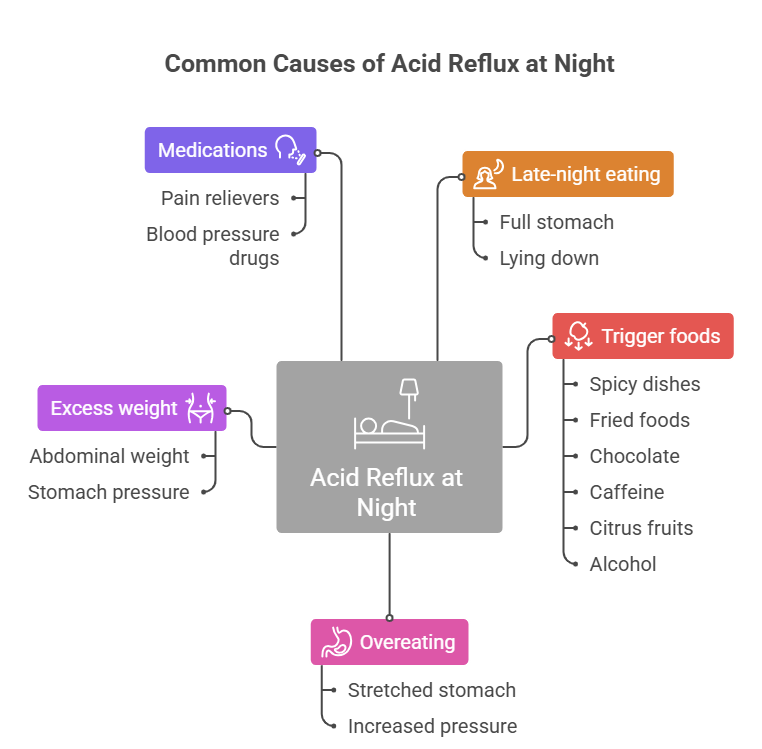
1. Late-night eating: Eating too close to bedtime is one of the most common reasons for nighttime reflux. When you lie down with a full stomach, the risk of acid moving upward increases.
2. Trigger foods: Certain foods are more likely to relax the lower esophageal sphincter or increase acid production. Common triggers include spicy dishes, fried or fatty foods, chocolate, caffeine, citrus fruits, and alcohol.
3. Overeating: Large meals stretch the stomach and increase internal pressure, which can push acid into the esophagus, especially when lying down soon after eating.
4. Excess weight: Carrying extra weight around the abdomen can put pressure on the stomach and contribute to reflux symptoms, including at night.
5. Medications: Some medications, such as certain pain relievers or blood pressure drugs, may worsen reflux either by irritating the esophagus or relaxing the muscle that keeps acid in the stomach.
Nighttime acid reflux doesn’t always show up the same way for everyone, but it often disrupts both comfort and sleep. Common signs to watch for include:
These symptoms may feel more noticeable at night, often leading to restless sleep and fatigue the next day.
Managing nighttime reflux often comes down to a few consistent habits rather than one major change.
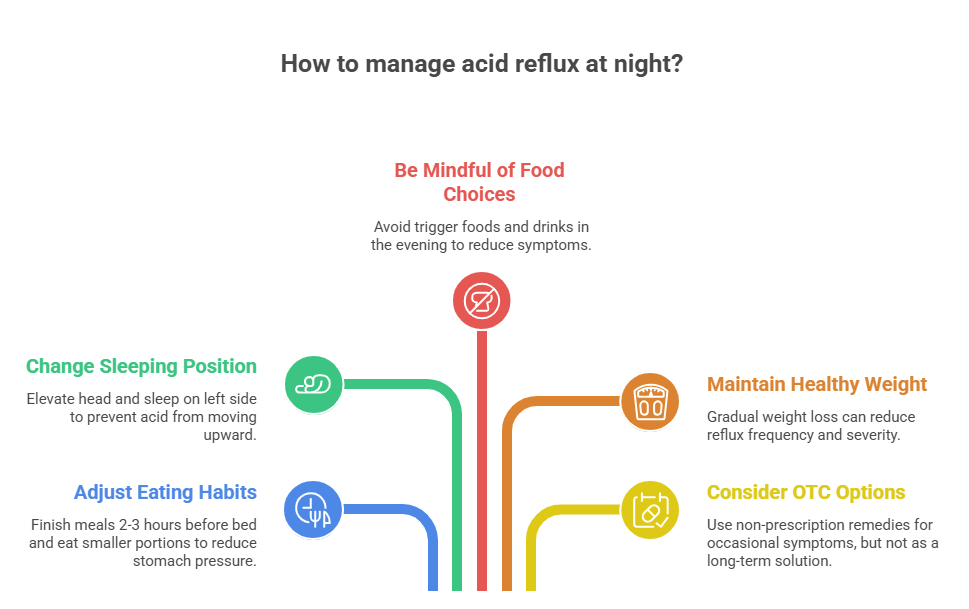
1. Adjust your eating habits: Try to finish your last meal at least two to three hours before going to bed. Eating smaller portions in the evening can also reduce pressure on the stomach.
2. Change your sleeping position: Keeping your head elevated while sleeping can help prevent acid from moving upward. Sleeping on your left side may also reduce reflux episodes for some people.
3. Be mindful of evening food choices: Avoid foods and drinks that you know trigger symptoms, especially later in the day. Even small changes here can make a noticeable difference.
4. Maintain a healthy weight: If excess weight is a factor, gradual and sustainable weight loss can help reduce the frequency and severity of reflux.
5. Consider over-the-counter options when needed: Occasional symptoms may be managed with non-prescription remedies, but these should not replace long-term lifestyle changes.
Occasional acid reflux is common, but ongoing or worsening symptoms shouldn’t be ignored. It may be time to seek medical advice if you notice:
Getting timely guidance can help prevent complications and ensure you’re managing the condition effectively.
A few consistent habits in the evening can make a noticeable difference in preventing nighttime symptoms:
Building this routine into your evenings can help minimize reflux and support more restful, uninterrupted sleep.
Nighttime acid reflux can quietly disrupt your sleep, but it’s often driven by everyday habits that are within your control. Small, consistent changes, like adjusting your meal timing, choosing lighter evening foods, and improving your sleep position, can make a meaningful difference over time. With a little awareness and the right routine, you can reduce symptoms, sleep more comfortably, and wake up feeling better.
When acid reflux starts disrupting your sleep or becoming more frequent, even small delays in addressing it can lead to ongoing discomfort. At Metro Urgent Care, our team provides prompt, same-day evaluations to identify what’s triggering your symptoms and guide you toward the right treatment for lasting relief.
Contact us today to be seen without delay and take control of your comfort.
Because lying down makes it easier for stomach acid to move into the esophagus, and the body’s natural clearing process slows during sleep.
Sleeping with your head elevated and on your left side is generally helpful.
Wait at least 2–3 hours before lying down.
Spicy foods, fatty meals, chocolate, caffeine, citrus fruits, and alcohol are common triggers.
If symptoms are frequent, severe, or don’t improve with lifestyle changes.


Stay protected this flu season!


