




A reading of 142/88 does not end a driving career. It does change how long your DOT medical card lasts.
Many commercial drivers dread the blood pressure check, and the fear is bigger than the rule. Your reading sorts you into one of four outcomes, and only the highest range keeps you from being certified until it comes down.
Federal guidelines for medical examiners treat a reading below 140/90 as normal or controlled for certification. You may see 120/80 quoted as the pass mark. That is the textbook definition of ideal blood pressure, not the DOT cutoff.
Either number can place you in a higher range. A top number of 135 with a bottom number of 92 still counts as stage 1. The examiner may repeat the reading after you rest and make the final call.
The examiner decides each case. Medication use, other conditions such as diabetes or sleep apnea, and your overall health can shorten a card even when the reading itself is acceptable. For more on timing, read about how often drivers need a DOT physical.
A stage 2 reading, or a stage 1 reading that is still above 140/90 at renewal, can lead to a one-time 3-month card. It is a window to get your pressure under control, not a penalty.
Use that time to see your own doctor, review or start treatment, and track readings at home. The card is usually a one-time offer, so the follow-up exam matters. Return with documented numbers and a current medication list.
Taking blood pressure medication does not disqualify you. Examiners want to see that your pressure is controlled and that the medicine does not cause dizziness or drowsiness that could affect driving.
There is no official list of approved or banned blood pressure medications. Drivers on treatment often receive shorter cards while the examiner confirms the plan is working. Take your medicine as prescribed on exam day, and tell the examiner about every prescription and over-the-counter product you use.
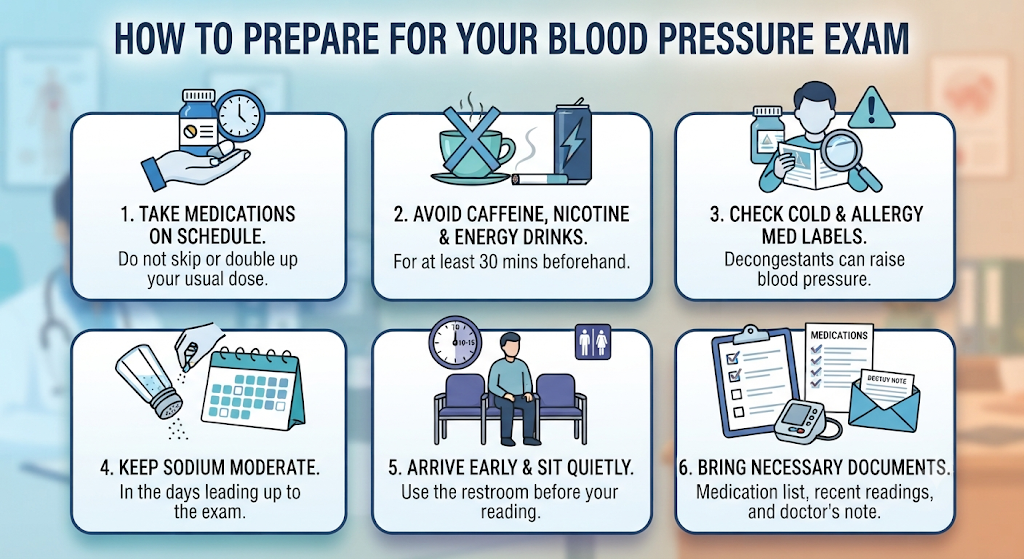
A quick fix on exam day rarely holds. Steady habits do more: regular walking, less sodium, limited alcohol, a healthy weight, and enough sleep. Untreated sleep apnea can also push pressure up, so mention loud snoring or daytime drowsiness to your doctor.
Our post on managing and preventing blood pressure is a practical starting point.
A very high reading with severe headache, chest pain, shortness of breath, vision changes, or confusion is a medical emergency, not a DOT question. Call 911. Our post on warning signs of dangerous high blood pressure lists what to watch for.
Blood pressure is one of the most manageable parts of the DOT physical. Check it regularly, take medication as prescribed, and bring documentation. Drivers who plan ahead walk in with fewer surprises.
The certified DOT medical examiners at Metro Urgent Care follow FMCSA guidelines and see walk-in patients at our Fullerton Ave, Montrose Ave, and La Grange locations. Bring your medication list and recent readings so the exam reflects your full picture.
Questions before you come? Visit our DOT physical exams page or contact us.
At 180/110 or higher, a driver generally cannot be certified until the reading comes down, while lower elevated readings typically bring shorter cards.
Yes, if your pressure is controlled and the examiner finds you safe to drive, often with a shorter card.
No, the benchmark for the longest card is a reading below 140/90.
Typically one year, with annual exams after that.
Yes, a repeat reading after resting is common.


Stay protected this flu season!